
Picture the call every project manager dreads. A job just got greenlit three states away, mobilization starts in ten days, and the housing that looked locked last week has evaporated. The host cancelled. The dates moved. The one place with parking for the trucks is suddenly booked. Now you are refreshing a consumer rental app at 9 p.m., building a housing plan from absolute zero, for a market you have never worked in before.
Here is the thing nobody tells you when you first start using vacation-rental sites for crews: finding a nice listing was never the hard part. The hard part is having the right housing ready in the right place at the right time, on your schedule, not the platform's. And consumer platforms leave you starting from scratch every single job.
That gap is exactly why so many teams eventually go looking for better housing options for construction companies. Not because the photos on the listing sites are bad, but because a photo is not a plan.
Why Consumer Platforms Leave You Starting Cold Every Time
Vacation-rental platforms were built for one traveler booking one trip. The entire system optimizes for whatever happens to be listed today, at whatever price the algorithm sets today, with whatever cancellation terms the individual host prefers. That works fine for a weekend getaway. It falls apart for a crew that needs certainty weeks out.
The supply itself is unstable by design. Short-term rental inventory swings hard with the seasons, and that volatility hits exactly when you need a firm answer.
The takeaway is simple. The good inventory near your job site gets claimed faster, and the closer you get to mobilization, the thinner your options become. On a consumer platform, your crew's housing depends on one individual's plans holding steady for the length of your project. If they decide to sell, block the dates, or cancel mid-stay, that is your problem to solve, usually at the worst possible moment. Every new job means a new market, new hosts, new terms, and a new gamble. You are not building anything. You are re-rolling the dice.
What "Same Thing" Really Misses
It is a fair question a lot of managers ask: we source from the big listing sites already, so isn't a specialized service basically the same thing with a markup? On the surface, both put a roof over your crew. Underneath, they are solving completely different problems.
A Listing Site
An inventory search. You type in a city and dates and see what is available in that moment.
Optimized for the platform's network, its rates, and its cancellation terms, not your build.
Starts cold every single time.
A Crew Housing Partner
Inventory plus groundwork already in place. Location, amenities, and terms chosen for working adults.
Move-in aligned to when the crew actually arrives, with terms that flex when timelines shift.
Ground already covered before you call.
The difference shows up in the parts of the job a listing photo never captures:
- Location that actually works. Crews need housing close to the site, because commute time eats directly into rest and recovery. It is worth knowing what actually matters when evaluating a place for a working crew.
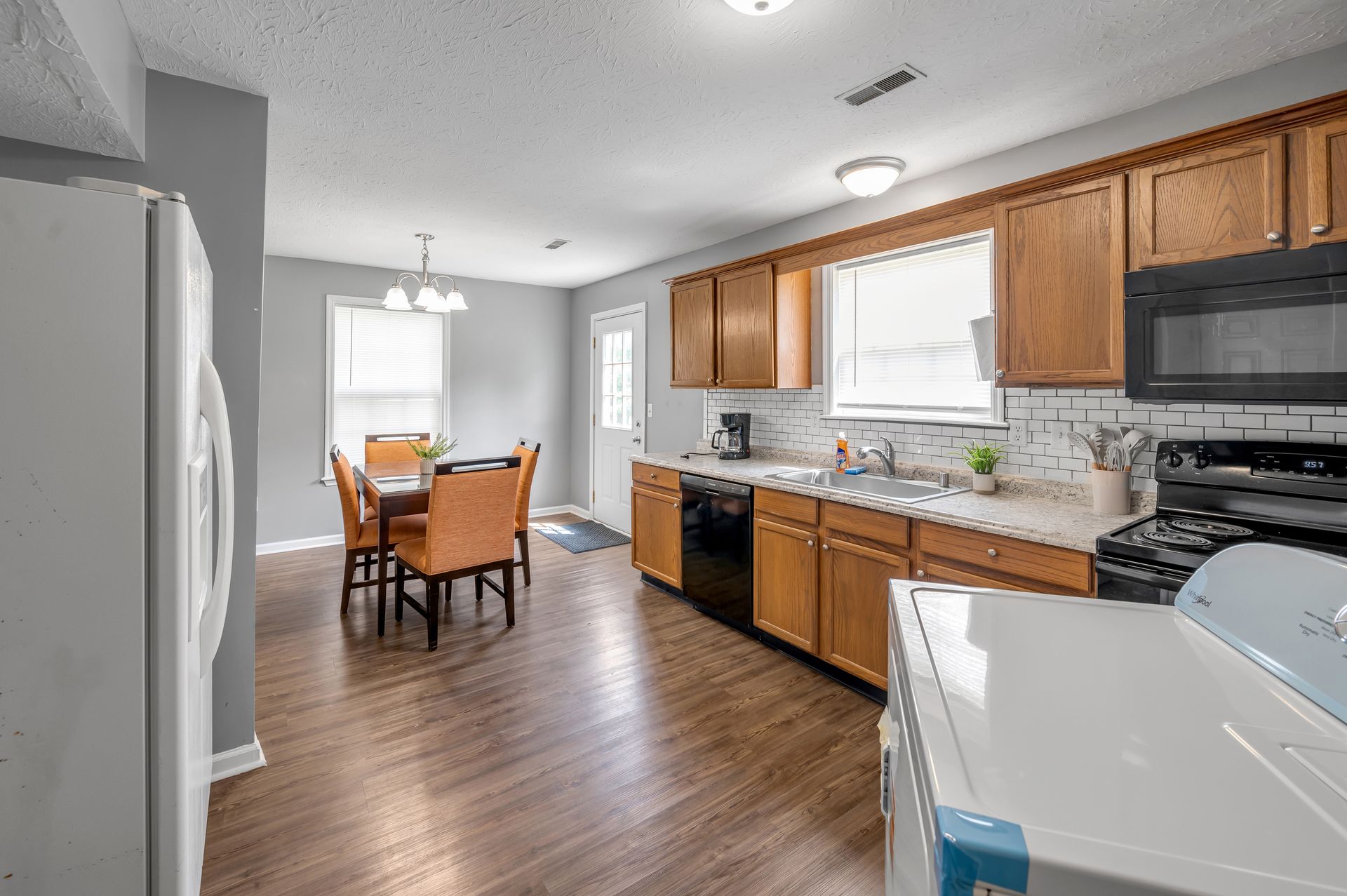
- Practical amenities. Full kitchens, laundry, Wi-Fi, and parking that fits trucks and trailers, not a cute loft with a two-car garage and a no-early-arrivals rule.
- Terms built for construction. Timelines shift. Crews change. Projects pivot. Housing has to flex with that, which is something a fixed nightly booking cannot do.
- A schedule that matches mobilization. Move-in aligned to when the crew actually arrives, not when the calendar happened to open up.
None of that is visible in a listing. All of it is the actual job.
The Quiet Advantage of a Footprint That's Already There
Here is the part that changes the math. The demand for skilled crews is concentrating in specific places. Reshoring, data-center construction, and life-sciences facilities are pulling workers into the same booming metros over and over, with regions like the Research Triangle and Charlotte reporting wage jumps driven by exactly this kind of specialized demand, according to workforce data from the Associated General Contractors. The industry is short hundreds of thousands of workers, and nearly one in five firms have turned down work because they could not staff it. When you win a job, you are almost certainly heading somewhere other crews are heading too.
That is where a built footprint quietly pays off. Across the projects we have housed, we have covered the same cities and markets that crews keep getting sent to. So when a job comes up in one of them, we are often not starting cold. We have housed there before. We know the area, the neighborhoods that work, the properties set up for working adults. And because the legwork is already done, we can move faster than a search that begins the day you call.
That is the honest distinction. A consumer site offers you whatever happens to be listed today. A built footprint offers you readiness. One is a fresh scramble every time. The other is ground already covered.
Housing should not be a scramble every time a job kicks off. When someone has already worked your markets, it does not have to be.
What Readiness Looks Like in Practice
Readiness is not a slogan. It is the difference between a housing plan and a housing panic. When the groundwork is in place, a few things stop being your problem.
You stop building from zero in unfamiliar markets, because someone has already mapped the near-site inventory that fits a crew. You stop absorbing host risk, because the properties are chosen and managed for construction stays, not weekend guests. You stop losing hours to booking, coordinating, and putting out fires, hours that quietly cost real money when a project manager is doing them instead of running the build.
The smartest teams treat housing the way they treat the rest of the job: planned in advance, not scrambled at the last minute.
If you are heading into a busy stretch, our guide to planning crew housing during peak construction season walks through how to get ahead of it. And if you want the full picture of what standards actually matter and how the pieces fit together, the ultimate guide to construction crew housing lays it out end to end.
The broader labor picture only makes this more urgent. With the shortage of skilled trades workers projected to run into the hundreds of thousands for years to come, per Bureau of Labor Statistics construction employment data, and immigration and demographic pressures tightening the pool further, the crews you do have are too valuable to house on a coin flip. Where they sleep affects how they show up. Reliable housing for traveling construction workers is not a perk. It is part of keeping a project on schedule.
Stop Rolling the Dice on Every Job
If you have ever been left with nothing for an upcoming job after a consumer platform fell through, you already understand the real cost. It is not just the stress of the scramble. It is the time, the risk, and the crew waiting on an answer while you start from scratch again.
You do not have to keep doing it that way. The value was never the listing. It was the ground already covered before you called.
If a consumer platform has ever left you empty-handed for an upcoming job, it is worth knowing where we already have your markets covered. Give us a call and we will tell you what readiness looks like in the places you actually work.
Call 859-249-8641