
Choosing between a mid-term and short-term rental can significantly affect your property’s income, workload, operating costs, and legal responsibilities. Both strategies can be profitable, but they appeal to different tenants and require different approaches to pricing, furnishing, marketing, and management.
Short-term rentals typically accommodate guests for a few nights or weeks. They often serve tourists, business travelers, event attendees, and people seeking temporary accommodation. Mid-term rentals usually last from 1 to 12 months and attract tenants who need a furnished home for a longer transitional period.
There is no universal answer to which rental model is better. The right option depends on your location, property type, target market, financial goals, local regulations, and willingness to manage frequent tenant turnover.
This guide compares mid-term and short-term rentals across the areas that matter most to property owners.
Rental Income
Rental income is often the first consideration for landlords deciding between mid-term and short-term rentals. Although short-term rentals can generate higher gross revenue in strong markets, mid-term rentals may provide more predictable income with fewer ongoing expenses.
Short-Term Rental Income
Short-term rentals are usually priced by the night or week. This gives owners the flexibility to adjust rates according to demand. Prices may increase during:
- Tourist seasons
- Public holidays
- Major sporting events
- Conferences and trade shows
- School breaks
- Concerts and festivals
- Local business or cultural events
A well-located short-term rental can sometimes earn more in a month than a traditional long-term lease. However, high earning potential does not guarantee higher profit. Owners must account for vacancies, platform fees, cleaning, maintenance, utilities, supplies, furnishing replacement, and professional management.
Short-term income can also fluctuate substantially. A property may be fully booked during peak season but experience weak demand during quieter periods. If local competition increases, owners may need to lower nightly rates or offer discounts to maintain occupancy.
A useful way to evaluate a short-term rental is to calculate its expected monthly revenue rather than focusing only on the advertised nightly rate:
Estimated monthly revenue
Nightly rate × Occupied nights
For example, a property charging $150 per night at 70% occupancy would generate approximately: $150 × 21 = $3,150
That figure is gross revenue, not profit. Cleaning charges may be passed on to guests, but other expenses still reduce the owner’s return.
Mid-Term Rental Income
Mid-term rentals are generally priced by the month, although leases may also cover several months at a time. Monthly rates are often lower than the equivalent short-term rate, but the property may remain occupied for longer periods.
This model can offer several income advantages:
- More consistent rent collection
- Fewer vacancy gaps between tenants
- Lower marketing costs
- Less frequent cleaning
- Reduced wear from guest turnover
- More predictable utility expenses
- Less dependence on seasonal tourism
Mid-term rentals may be especially attractive in areas with hospitals, universities, military facilities, corporate offices, construction projects, or relocation activity. Tenants may include construction crews, traveling nurses, consultants, graduate students, relocating employees, insurance-displacement tenants, and people renovating their homes.
An owner may earn less per month than with a fully optimized short-term rental, but the net income can be competitive once operating expenses and the value of the owner’s time are considered.
Comparing Gross and Net Income
The most important comparison is not gross rent but net operating income.
Consider expenses such as:
- Mortgage or financing costs
- Property taxes
- Insurance
- Utilities
- Internet service
- Cleaning
- Repairs and maintenance
- Consumable supplies
- Furnishings and replacement items
- Property management
- Listing or booking platform fees
- Licensing and compliance costs
- Vacancy
A short-term rental can generate impressive revenue but require constant spending to produce it. A mid-term rental may produce a lower headline figure while delivering a steadier and more efficient return.
Before choosing a strategy, create realistic projections for both models. Use conservative occupancy assumptions, include seasonal changes, and budget for unexpected repairs.
Rental Property Management
The management demands of each rental model are significantly different. Short-term rentals generally involve more frequent communication and operational coordination, while mid-term rentals tend to resemble a furnished version of conventional property management.
Managing a Short-Term Rental
Short-term rental management is highly hands-on unless an owner hires a professional manager. Each booking can require:
- Guest screening
- Reservation coordination
- Check-in instructions
- Check-out reminders
- Cleaning and inspection
- Linen and towel replacement
- Restocking supplies
- Maintenance responses
- Review management
- Pricing adjustments
- Guest support
Guests often expect fast responses, clear instructions, and hotel-like service. A minor issue, such as a malfunctioning appliance or missing towel, can affect the guest experience and lead to a negative review.
Short-term rental owners also need reliable systems. Smart locks, automated messages, digital guidebooks, cleaning checklists, noise monitoring, and calendar synchronization can reduce the workload. However, technology does not eliminate the need for oversight. Someone must still handle emergencies, inspect the property, and coordinate repairs.
Professional short-term rental management may simplify operations, but management fees can be substantial. Owners should compare the cost of professional management with the value of their own time and the potential increase in occupancy or guest satisfaction.
Managing a Mid-Term Rental
Mid-term rentals usually involve fewer tenant interactions after move-in. The owner or manager may need to handle:
- Tenant screening
- Lease preparation
- Deposit collection
- Move-in documentation
- Utility arrangements
- Periodic maintenance
- Lease renewals or extensions
- Move-out inspections
Because tenants stay longer, owners typically do not need to coordinate weekly cleaning or respond to daily questions. This can make mid-term rentals easier to operate remotely.
However, mid-term rentals still require careful management. A tenant may cause more significant wear over several months than a guest staying for a weekend. Proper screening, a clear lease, regular inspections where legally permitted, and prompt maintenance are important.
Mid-term tenants may also have more legal protections than short-term guests. Owners should understand the difference between a guest agreement and a residential tenancy agreement before accepting a booking.
Owner Involvement
Short-term rentals may be a better fit for owners who enjoy hospitality, guest communication, and dynamic pricing. Mid-term rentals may suit owners who prefer a more stable arrangement and fewer interruptions.
Neither model is entirely passive. The key difference is the rhythm of the work:
Short-term rentals
Frequent, smaller operational tasks
Mid-term rentals
Fewer but potentially more substantial tenancy-related tasks
Owners should choose the model that fits their schedule, experience, and access to reliable local service providers.
Rental Regulations & Laws
Legal requirements can determine whether a rental strategy is practical or even permitted. Regulations vary by country, state, province, municipality, and building. Owners should verify current requirements with the relevant local authorities and qualified professionals.
Short-Term Rental Regulations
Short-term rentals are often subject to stricter rules because they can affect housing supply, neighborhood activity, parking, noise, and building security. Requirements may include:
- A short-term rental license
- Business registration
- Occupancy limits
- Safety inspections
- Fire and carbon monoxide equipment
- Insurance requirements
- Local tax collection
- Minimum-stay rules
- Host registration
- Restrictions on primary residences
- Limits on rental days per year
- Building or homeowners’ association approval
Some cities prohibit short-term rentals in certain zones or allow them only when the owner lives on-site. Others distinguish between renting an entire property and renting a private room.
Platform rules do not replace local law. A property listed on a booking website may still require a permit, tax registration, or safety inspection. Advertising a property before confirming compliance can expose an owner to fines, listing removal, or other penalties.
Mid-Term Rental Regulations
Mid-term rentals may fall under residential tenancy laws once the tenant occupies the property for a specified period. Depending on the jurisdiction, the tenant may receive legal protections relating to:
- Security deposits
- Rent increases
- Notice periods
- Repairs and habitability
- Entry by the landlord
- Eviction procedures
- Anti-discrimination rules
- Lease termination
- Utility billing
The exact threshold between a short-term guest and a residential tenant differs by location. A “30-day rental” is not automatically governed by the same rules everywhere.
Owners should use a written agreement that clearly explains the rental term, rent, deposit, utilities, maintenance responsibilities, occupancy rules, and renewal or termination conditions. A local attorney or qualified housing professional can help ensure the agreement complies with applicable law.
Taxes and Insurance
Both rental models may involve tax obligations, but the details can differ. Short-term rentals may be subject to lodging, hotel, tourism, or occupancy taxes. Mid-term rental income may be treated differently for local or national tax purposes.
Insurance is equally important. A standard homeowner policy may not cover commercial rental activity, guest damage, or tenant-related claims. Owners should discuss their intended rental model with an insurance provider and confirm coverage for:
- Building damage
- Liability
- Theft
- Loss of rental income
- Guest or tenant injuries
- Furnishings
- Water damage
- Vandalism
Regulatory compliance should be assessed before comparing projected income. A strategy that produces attractive revenue but violates local rules is not a sustainable investment.
Rental Furnishings & Amenities
The furnishing and amenity requirements for mid-term and short-term rentals overlap, but the priorities are different.
Short-Term Rental Furnishings
Short-term guests generally expect a comfortable, attractive, and convenient space. The property should be ready for immediate occupancy, with little or nothing required from the guest.
Common essentials include:
- A comfortable bed and quality bedding
- Towels and toiletries
- Fully equipped kitchen
- Cookware and tableware
- Coffee and tea supplies
- Wi-Fi
- Smart television or entertainment options
- Hair dryer
- Iron and ironing board
- Cleaning supplies
- Adequate lighting
- Luggage storage
- Clear check-in instructions
Presentation also matters. Professional photography, coordinated décor, uncluttered rooms, and comfortable furniture can improve booking performance. Many guests compare properties visually, so an appealing listing can support stronger pricing.
At the same time, short-term rentals should be designed for durability. Easily damaged décor, delicate furniture, and excessive decorative objects can increase maintenance costs. Owners should select washable fabrics, sturdy surfaces, and replaceable items.
Mid-Term Rental Furnishings
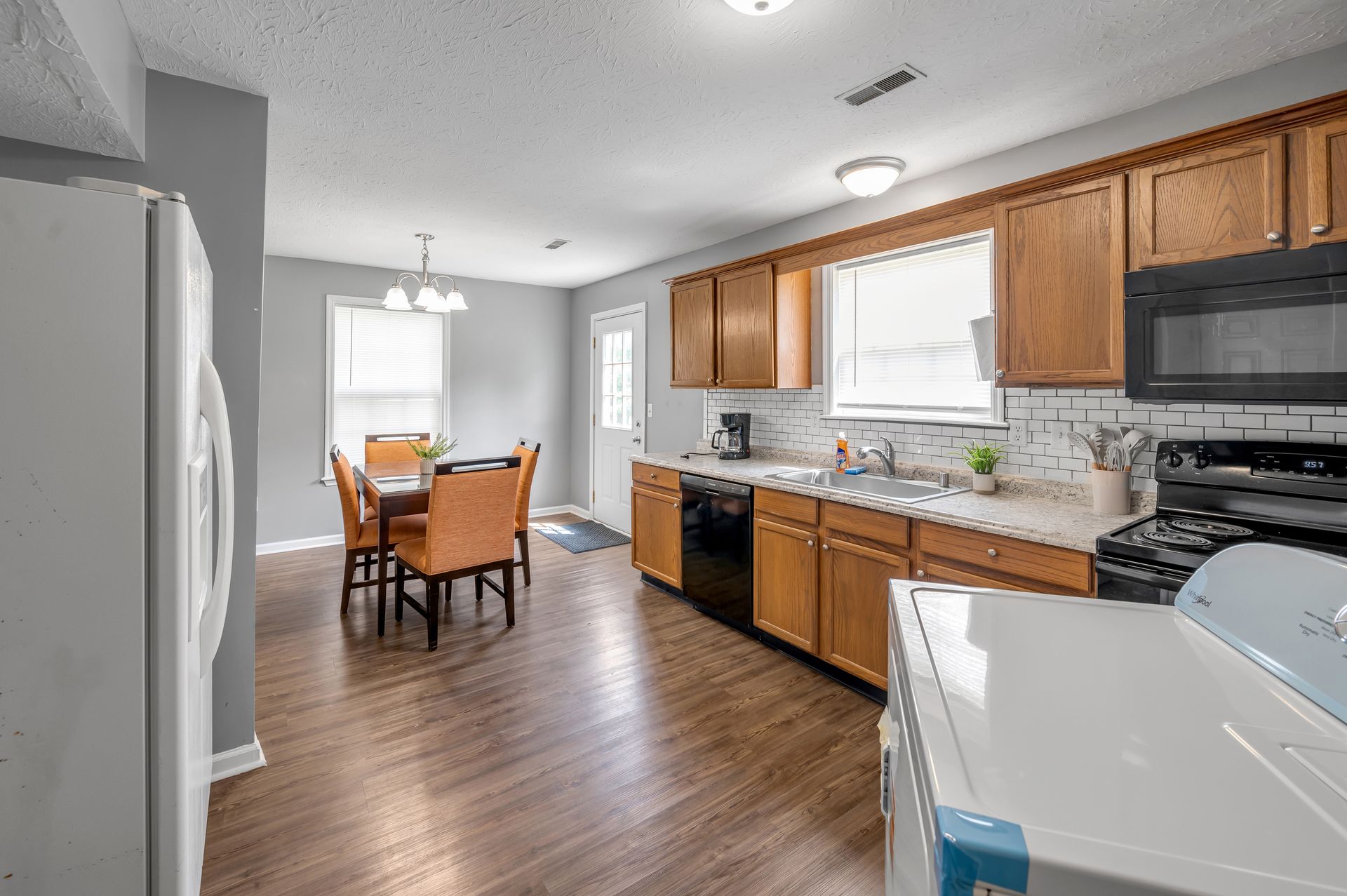
Mid-term tenants usually need a home that supports everyday living rather than a temporary hotel experience. In addition to beds and basic furniture, they may value:
- A practical workspace
- A comfortable sofa
- Full-size appliances
- Ample storage
- A washer and dryer
- Quality kitchen equipment
- Reliable high-speed internet
- Blackout curtains
- Good lighting
- Basic cleaning tools
- Outdoor space or parking
- Utilities included in the rent
A mid-term tenant may bring personal belongings, so storage can be more important than decorative styling. The property should feel functional, comfortable, and easy to maintain over several months.
Because the tenant may use the furniture every day, quality matters. A low-cost sofa or bed may not withstand repeated use. Investing in durable, neutral furnishings can reduce replacement costs and improve tenant satisfaction.
Utilities and Supplies
Short-term rentals commonly include all utilities and supplies in the nightly rate. Mid-term rentals may also include utilities, especially when the property is marketed as a furnished, move-in-ready home. However, owners should set reasonable-use policies if utilities are included.
For example, an agreement might explain which services are covered and how unusually high consumption will be handled, subject to local law. Internet reliability is particularly important for remote workers and traveling professionals.
Which Type Is Better for Your Rental Property?
The better strategy depends on the property and the owner’s priorities.
Option A
Short-Term Rentals May Be Better When:
- The property is in a strong tourism or business-travel market
- Local law clearly permits short-term rentals
- Demand varies by season but includes high-value peak periods
- The property has attractive amenities or a distinctive location
- You can provide reliable cleaning and maintenance
- You are comfortable with frequent guest communication
- You want flexibility to block dates for personal use
- You are prepared for changing occupancy and revenue
Option B
Mid-Term Rentals May Be Better When:
- The area has hospitals, universities, or corporate employers
- You want more predictable monthly income
- You prefer fewer tenant turnovers
- You want to reduce cleaning and restocking costs
- Local short-term rental regulations are restrictive
- The property is suitable for longer everyday living
- You want to manage the property with less frequent involvement
- You can attract reliable professional or transitional tenants
Short-term rentals can be particularly effective near airports, beaches, entertainment districts, convention centers, national attractions, and major transportation hubs.
Mid-term rentals can work well in neighborhoods that are less attractive to tourists but have steady demand from workers, students, relocating households, or people between permanent homes.
A Hybrid Strategy
Some owners use both models throughout the year. For example, they may offer short-term stays during a busy tourist season and mid-term leases during the off-season. This can balance higher seasonal revenue with more stable occupancy.
A hybrid approach requires careful planning. Owners should confirm that the lease structure, tax treatment, insurance, and local regulations allow the intended changes. Frequent transitions can also create more work, particularly if the property needs to be cleaned, inspected, and re-furnished between occupants.
Another option is to target consistent mid-term tenants while keeping the property available for occasional personal use. This may produce less revenue than maximizing short-term bookings but offer a better balance between income and flexibility.
Questions to Ask Before Choosing
Before committing to either strategy, consider:
- What type of rental demand exists in the area?
- How much can the property realistically earn after expenses?
- What local permits or restrictions apply?
- How much time can you spend managing the property?
- Do you have dependable cleaners and maintenance contractors?
- Is the property furnished appropriately?
- What tenant or guest profile are you prepared to serve?
- How much income volatility can you tolerate?
- Does your insurance cover the selected rental model?
- Would a professional manager improve the results?
A detailed comparison spreadsheet can help. Estimate revenue, occupancy, turnover, utilities, repairs, management, taxes, insurance, and vacancy for each option. Include a value for your time, even if you plan to manage the property yourself.
Conclusion
Mid-term and short-term rentals can both be successful, but they are different businesses.
Short-term rentals may offer higher gross revenue and greater flexibility, particularly in strong tourism and event markets. In exchange, they usually require more active management, more frequent cleaning, more marketing, and closer attention to local regulations.
Mid-term rentals often provide steadier occupancy, lower turnover costs, and a simpler management routine. They can be an excellent choice in areas with demand from traveling professionals, students, relocating employees, and households needing temporary accommodation.
The best strategy is the one that fits your property, local market, legal environment, financial objectives, and available time. Compare expected net income, not just advertised rent, and confirm all licensing, tenancy, tax, and insurance requirements before accepting bookings.
For many property owners, the decision is not about finding the universally highest-earning model. It is about choosing a rental approach that can be operated consistently, legally, and profitably over the long term.