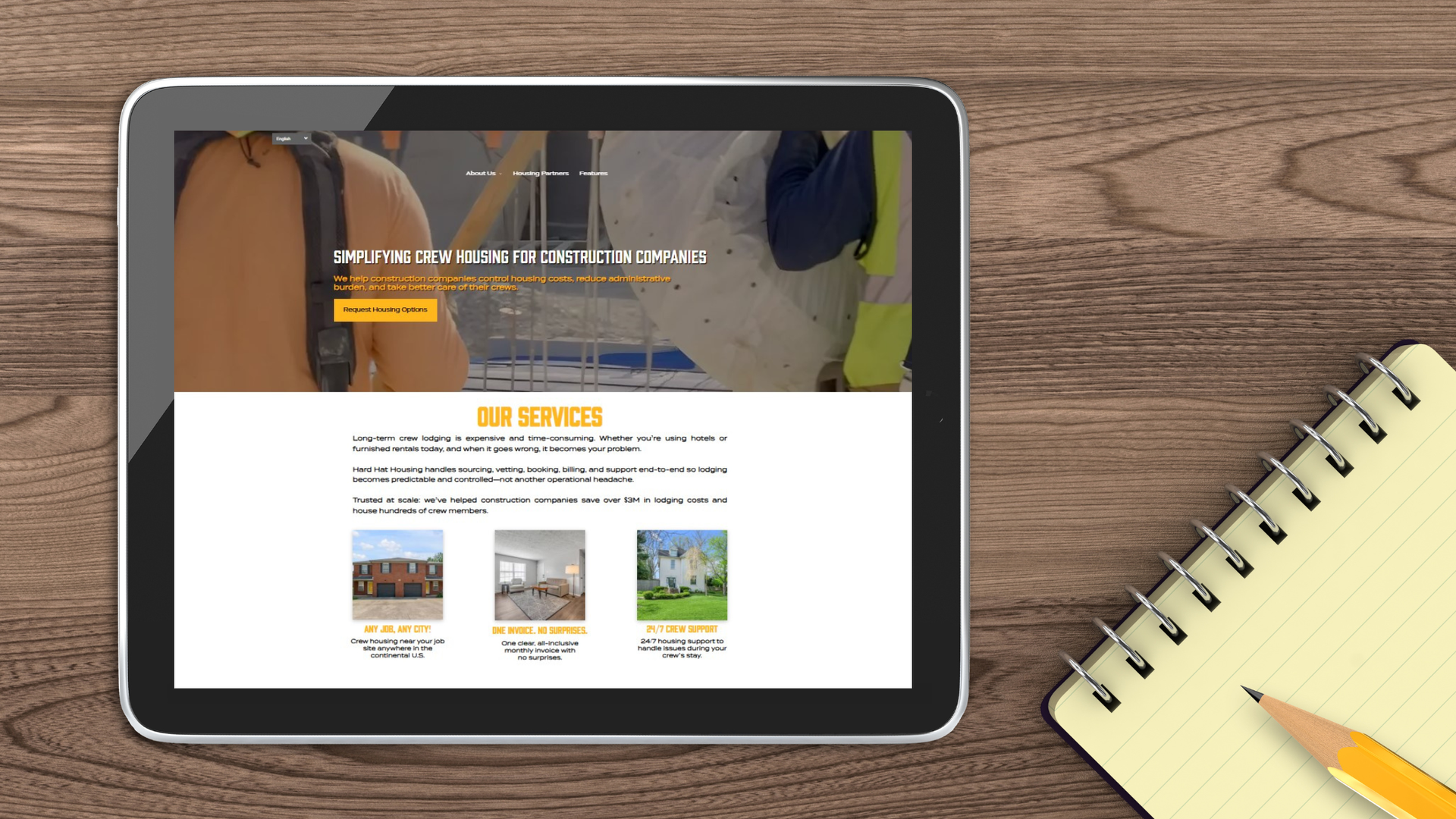

Renting your home to corporate housing means leasing it to a company rather than to an individual. The company holds the lease, pays the rent, and places the people who stay there.
It is a different arrangement from a standard tenancy, and most owners come to it with the same question: what am I actually signing up for? This walks through what corporate housing is, who uses it, what the agreement covers, and where you are committed against where you are not.
What corporate housing actually is
Corporate housing is furnished residential property leased by a business to accommodate its workers. Stays are measured in months rather than nights, which puts it between a short term rental and a traditional year long lease.
The defining feature is who your tenant is. In a normal rental, you lease to the person living in the home. In corporate housing, you lease to the company, and the company places its people. That single difference changes most of the things owners worry about, including who you chase for rent and who handles the occupants day to day.
Construction crew housing is one form of this. So is housing for traveling medical staff, relocating employees, and workers displaced by insurance claims. The model is the same in each case. Only the industry changes.
Which companies rent homes this way
Corporate housing demand comes from industries that move people to where the work is, for a defined period, then move them on.
- Construction. Crews travel to job sites for the length of a project. Construction is one of the largest employment sectors in the country, and travel between projects is a normal part of the work.
- Healthcare staffing. Travel nurses and allied health professionals working contract assignments.
- Corporate relocation. Employees moving to a new city who need somewhere to live while they find permanent housing.
- Insurance displacement. Families out of their homes during repairs, with the stay covered by a claim.
- Government and military. Personnel on temporary assignment.
What these have in common is a company or institution paying, a stay with a known shape to it, and a need for a furnished home rather than a hotel room. That is the demand your property would be serving.
What the agreement covers
This is the part worth understanding before you talk to anyone. A corporate housing agreement is more specific than a standard lease, because the company needs to know exactly what it is getting and you need to know exactly what you are providing.
Terms vary between companies. Below is how they work at Hard Hat Housing, as a concrete example of what to expect and what to ask about.
| Term | What it covers |
|---|---|
| Rate | What the property earns per month. This is a conversation, not a number handed to you. |
| Availability | When the property can be occupied, and whether there is a date after which you need it back. |
| Cleaning schedule | Professional cleaning is handled on a schedule built into the lease, roughly every four to six weeks. You are not arranging it and you are not paying for it during the stay. |
| Final cleaning | The vacating clean at the end is arranged by you and paid for by us. |
| Damage deposit | The deposit is held by you, not by us. It is returned within 14 days of lease end or vacancy. |
| House specifics | Parking rules, any spaces that are off limits, quirks a tenant would need to know. |
| Fees to you | None, at any stage. You keep the full agreed rent. |
Once those are agreed, they are the terms. Not a starting point for renegotiation after people have moved in. That is the real weight of the decision, and it is why we would rather you take an extra day with it than rush.
If you are comparing companies, the questions worth asking are the same ones in that table. Who signs the lease. Who holds the deposit. Who pays for cleaning and how often. Whether there are any fees to you. Get all five answered before you agree to anything.
How the process works
With most corporate housing companies the sequence is similar, and the early steps commit you to very little.
The first conversation. A fit check running in both directions. We ask about the property: location, bedroom count, parking, whether it is furnished, and roughly when it could be available. You ask whatever you want about how the arrangement works and what the tenants are like. Nothing is signed, nothing is listed, and there is no fee. The only decision here is whether it is worth a second conversation.
The property review. A real look at whether the home works for a working tenant. Beds and bedroom configuration, a kitchen people can cook in, laundry, parking that fits work vehicles, general condition. This is a matching exercise, not a test you pass or fail. A three bedroom house with a driveway fits differently than a one bedroom condo downtown, and both can work depending on what is moving through your market.
One thing to know: we source properties that are already furnished. We are not asking you to buy furniture or renovate. If the property is not furnished, it is not a fit right now, and we will tell you rather than send you shopping.
Agreeing terms. The table above. This is the step where reversibility genuinely narrows.
Going live. Your property becomes available to be matched. Available does not mean occupied. It means we can put it in front of a construction company looking for housing near a job site in your area.
Here is the part that surprises people most: when we contact you about a placement, a crew is typically already ready to move in. We are not calling to gauge interest or start a search. The demand exists first, and we are matching it to your property.
That is a different rhythm from listing a property publicly and waiting. No stream of inquiries to answer, no showings to schedule, no negotiating with strangers. There is a quiet period, and then a specific match.
What the tenancy is actually like
Reliable tenants is the phrase every rental service uses, so it is fair to ask what stands behind it.
The people staying in your property are working construction crews, placed by the construction company that employs and supervises them. They are in your area because there is a job site there. We place them and support them during the stay. Their employer remains responsible for them as workers.
Practically, that shapes the tenancy. Crews leave early and come back tired. The property functions as somewhere to rest between shifts, not somewhere to entertain. We sign the lease and we pay the rent, so you are not chasing payment from individual tenants.
It also means the stay has a defined shape from day one. Projects have timelines. Everyone knows roughly how long this is.
Our FAQ page covers the smaller mechanical questions that tend to come up, and our guide to renting your property to construction workers goes deeper on the property side.
Where you are committed, and where you are not
Read back through the process and one thing becomes clear. The weight sits at the terms stage, not at the start.
So the question worth sitting with is not whether you are ready to say yes to everything. It is whether the shape of the arrangement suits you: months rather than nights, a company that signs the lease and pays the rent, and a partner who calls when there is a match rather than a platform where you wait.
Start where the risk is lowest
You now know what renting your home to corporate housing involves, what the agreement covers, and where the real commitment sits. If none of it gave you pause, the first step is the smallest one on the list.
Tell us about your property and we will start with the fit check. No listing, no fee, no obligation, just a conversation about whether it is a match.
Submit Your Property