
Building a Construction Accommodation Schedule
Construction schedules usually focus on permits, materials, equipment, labor and milestones. Accommodation is often treated as an administrative detail, something to arrange after the contract is awarded and the crew list is finalized.
That approach can create avoidable problems.
When a project brings workers into a new market, suitable housing may already be limited. Apartments can be leased, hotels can fill up, and seasonal demand can push rates higher. A delayed housing decision may also increase commuting time, reduce crew flexibility and create last-minute costs that were never included in the original estimate.
A construction accommodation schedule solves this by turning housing into a planned project activity. It identifies what needs to happen, when decisions must be made and who owns each step, from the initial bid through mobilization and demobilization.
01 What Is a Construction Accommodation Schedule, and Why Do You Need One?
A construction accommodation schedule is a timeline for planning, sourcing, approving, booking and managing housing for an out-of-town project workforce.
It should connect the project's labor plan with its housing requirements. That means considering:
- The expected number of workers
- Crew arrival and departure dates
- Trade schedules and shift patterns
- The project location
- The distance workers can reasonably travel
- The type of housing required
- The budget and billing method
- Lease terms and cancellation needs
- Responsibility for utilities, cleaning, maintenance and damages
The schedule begins before mobilization. Ideally, accommodation planning starts during estimating and bidding, when the contractor is building a realistic picture of project costs.
Federal acquisition guidance recognizes that lodging and other costs can be significant in construction and job-site operations. The Federal Acquisition Regulation's cost principles specifically address lodging, subsistence and related expenses when evaluating allowable project costs. While every contract and accounting policy is different, the broader lesson is clear: accommodation should be treated as a planned project cost rather than an afterthought.
A practical accommodation timeline
A useful schedule may include the following stages:
- During estimating Define the likely crew size, work duration, location and accommodation assumptions. Request preliminary housing rates so the bid reflects current market conditions.
- Before bid submission Identify whether the project requires apartments, extended-stay lodging, furnished homes, workforce housing or a combination. Add expected deposits, fees, transportation and utilities to the budget.
- After award Confirm the labor forecast, verify the start date and update the housing search. At this point, the contractor should move from rough pricing to specific properties and availability.
- Four to eight weeks before mobilization Shortlist suitable options, inspect or verify them, negotiate terms and secure the required units. Larger projects may need an earlier start.
- Two to four weeks before arrival Confirm the final roster, assign rooms or units, arrange keys, verify utilities and distribute occupancy rules.
- During the project Track changes in crew size, extensions, transfers, maintenance requests and lease deadlines.
- Before demobilization Give proper notice, coordinate move-out inspections, return keys, document property condition and reconcile the final charges.
The precise timing depends on the market and project size, but the principle is consistent: each housing decision should have an owner and a deadline.
Why early planning matters
Early planning protects the project in several ways.
First, it improves cost certainty. Housing rates can change as availability changes. A contractor that waits until the last minute may have to accept a smaller selection of properties at a higher price. Booking earlier can create more negotiating leverage and make it easier to compare alternatives.
Second, it supports workforce planning. The housing arrangement may affect which workers can be assigned to the project, whether multiple crews can share units and how easily supervisors can move people between phases.
Third, it reduces operational risk. If housing is not ready when workers arrive, the contractor may need emergency hotel rooms, reimbursements or extended travel. Those solutions can be expensive and distracting.
Finally, it protects productivity. A long commute can reduce rest time and make shift changes more difficult. Housing close to the job site is not automatically the cheapest option, but the lowest nightly rate may not be the lowest overall project cost.
02 What Should You Look for When Searching for Crew Housing?
The right housing is more than a bed near the job site. It needs to support the project's schedule, budget, safety expectations and workforce experience.
Start with an accurate housing brief
Before searching, prepare a written brief. Include:
The crew housing brief
- Project address and anticipated work areas
- Number of workers by arrival date
- Expected length of stay
- Whether workers will share bedrooms or units
- Desired number of beds and bathrooms
- Parking requirements
- Kitchen and laundry needs
- Internet requirements
- Pet or accessibility considerations
- Budget range
- Flexibility for extensions or reductions
- Preferred maximum commute time
This prevents the search from becoming a series of disconnected property listings. It also gives housing providers enough information to recommend appropriate inventory.
Evaluate location by total travel impact
A property's distance from the job site is important, but the real question is how the commute affects the crew.
Consider traffic patterns, road conditions, parking availability, shift start times and whether workers may need to travel to more than one site. A house that looks close on a map may be inconvenient during peak traffic or unsuitable for early-morning shifts.
Also look at nearby essentials. Grocery stores, fuel stations, pharmacies, restaurants and laundry facilities can make a major difference during a long assignment. If the project is in a rural or high-demand area, confirm whether the surrounding community can support the crew's everyday needs.
Workforce housing challenges are often connected to limited local supply, high costs and competition for available homes. A workforce housing report from the Northwest Colorado Council of Governments describes how housing shortages can be worsened by construction costs, labor pressures, remote workers and second-home demand. The takeaway for contractors is practical: begin searching early, especially in resort, industrial, remote or rapidly growing markets.
Check capacity and privacy
Do not evaluate housing only by the total number of beds. Review the layout.
Questions to ask include:
- How many bedrooms are available?
- How many workers will share each room?
- Are there enough bathrooms for the occupancy level?
- Is there sufficient refrigerator and freezer space?
- Is the kitchen equipped for the number of residents?
- Are there common areas where workers can relax?
- Is there a secure place for personal belongings?
- Can the property accommodate changes in crew size?
Overcrowding can create disputes, wear on the property and dissatisfaction among workers. A slightly higher-cost arrangement with a better layout may provide better value than a cheaper unit that is difficult to live in.
Verify basic health and safety conditions
Housing should be clean, functional and maintained before workers arrive. Confirm smoke and carbon monoxide detectors, locks, lighting, heating and cooling, plumbing, electrical systems, stairs, windows and emergency access.
The exact legal requirements depend on the property type, location and workforce arrangement. However, OSHA's construction sanitation standard, 29 CFR 1926.51, requires employers to provide appropriate washing facilities and sanitation for construction employees. OSHA also emphasizes that employers must provide sanitary and readily available toilet facilities in its restrooms and sanitation guidance.
These rules may not answer every question about rented housing, but they reinforce an important standard: accommodation should not be selected without considering basic sanitation, maintenance and worker welfare.
Confirm what is furnished and included
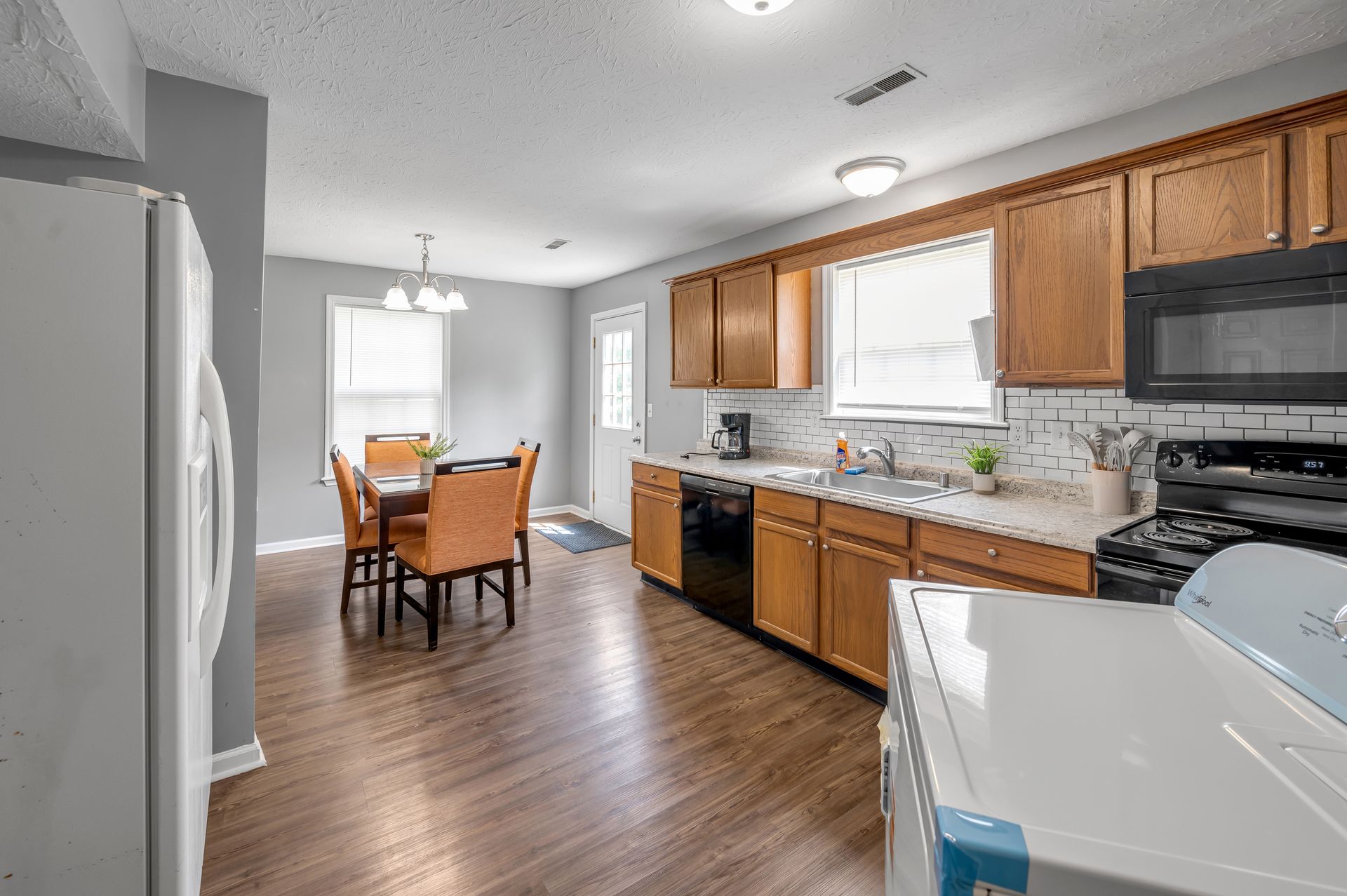
"Furnished" can mean different things. Ask for an inventory or written description covering:
- Beds and mattresses
- Bedroom furniture
- Kitchen appliances
- Cookware and utensils
- Linens and towels
- Washer and dryer
- Wi-Fi
- Television or entertainment equipment
- Cleaning supplies
- Outdoor furniture
- Parking
- Utilities
Clarify whether utilities are included, capped or billed separately. Ask whether internet service is already active and whether the property can support the expected number of users.
Look beyond the listing
Photos and descriptions are useful, but they do not replace verification. Request current photos. Confirm the address, unit configuration, access instructions and condition.
For larger assignments, it can be helpful to maintain a comparison sheet that records availability, total monthly cost, fees, occupancy limits, commute time, amenities, cancellation terms and outstanding questions. This makes the final choice easier to defend internally and reduces the chance that an important detail is overlooked.
03 What Needs to Be Agreed Before Signing the Lease?
Once suitable housing has been found, the lease or booking agreement should be reviewed as a project document, not just a routine rental form.
Identify all parties and occupants
Confirm the legal name of the landlord or housing provider, the tenant or contracting company and the authorized contact person. If individual workers will occupy the property but the company is paying, the agreement should clearly explain that arrangement.
Provide an estimated occupant list when required, but also clarify the process for substitutions. Construction crews can change because of scheduling, illness, training, transfers or subcontractor needs.
Define dates and extension rights
The agreement should state:
- Lease start and end dates
- Notice requirements
- Extension process
- Early termination terms
- Charges for late move-out
Project dates can move. Before signing, determine what happens if the start date is delayed, the work finishes early or the project is extended. Flexibility may have a cost, but the cost should be known before the commitment is made.
Confirm the complete price
Do not compare properties using rent alone. Ask for a full breakdown of:
- Base rent
- Cleaning fees
- Application or booking fees
- Security deposit
- Utility charges
- Internet charges
- Taxes
- Pet fees
- Parking fees
- Maintenance charges
- Damage charges
- Early departure costs
- Extension rates
Clarify when invoices are issued, who receives them and how deposits are refunded. If the company needs purchase orders, invoices or specific billing documentation, address that before the lease is executed.
Agree on maintenance and emergency response
You should know how workers report maintenance problems and who responds to emergencies. Establish whether there is a 24-hour contact for urgent issues such as loss of heat, water leaks, electrical failures or lockouts.
Also clarify the expected response time for routine repairs. A broken appliance may not be an emergency, but unresolved problems can affect worker satisfaction and the condition of the property.
Document condition and responsibility
Complete a move-in inspection with photographs or video. Record existing damage, missing items, stains, appliance condition, meter readings where relevant and the number of keys provided.
You and the housing provider should have already agreed on how damage is assessed and how responsibility is assigned. Normal wear and tear should be distinguished from avoidable damage. A clear process reduces disputes at move-out.
04 How Hard Hat Housing Can Help
A construction accommodation schedule is effective when someone actively manages it. Hard Hat Housing can help contractors and construction companies turn a scattered housing search into a coordinated process.
The first step is understanding the project. That includes the job-site location, crew size, arrival dates, expected duration and budget. With that information, the search can focus on practical options instead of sending teams through unsuitable listings.
Hard Hat Housing can also help you compare accommodations using project-relevant criteria: location, occupancy, furnishings, amenities, availability and total cost. This is especially useful when the market is tight or when a project requires multiple properties.
As the project develops, housing needs may change. A crew may expand, a phase may be delayed or a contract may be extended. A dedicated housing partner can help manage those changes, communicate with property owners and keep the housing plan aligned with the construction schedule.
The company can also support the details that often consume internal time:
- Coordinating availability
- Reviewing housing options
- Confirming property details
- Managing booking information
- Organizing move-in instructions
- Communicating occupancy expectations
- Supporting extensions and changes
- Coordinating move-out requirements
The best time to involve a housing partner is before the project reaches mobilization. During the bid stage, preliminary accommodation information can improve the estimate. After award, early coordination can help secure suitable housing before availability narrows.
Housing is part of mobilization, workforce planning and project cost control. By scheduling it early and assigning clear responsibilities, contractors can reduce last-minute decisions, protect their budget and give crews a better place to live while the work gets done.
Hard Hat Housing can help build that plan, from the first housing estimate to the final move-out, so accommodation supports the project instead of becoming another obstacle.
If you have a project on the board and the housing line is still blank, that is the right moment to start. Tell us the location, the crew size and the dates, and we will come back with options that fit the schedule you are already working to.
Request Crew Housing