For property owners, renting to construction crews can be an attractive alternative to both traditional long-term leasing and high-turnover vacation rentals. Traveling crews often need furnished housing for several months while working on a project away from home, which creates demand for practical homes with kitchens, laundry, parking, and easy access to the job site.
The opportunity is strongest in areas with major infrastructure, energy, manufacturing, data center, hospital, or commercial development. Construction companies may need to house several workers at once, and individual employees may receive per diem or lodging allowances when traveling for work. The IRS describes per diem as a daily allowance covering lodging, meals, and incidental costs while an employee travels for business, as set out in its Fringe Benefit Guide.
Renting to construction crews is not automatically right for every landlord. Owners need to understand how crew housing differs from vacation rentals, what a typical stay looks like, and how to protect the property with clear procedures and documentation. Local licensing, zoning, insurance, fair housing, and landlord-tenant rules may also apply.
So, is it worth it? For many owners, yes, particularly when the home is furnished, functional, well located, and managed with a clear rental process.
Why Construction Crews Make Good Tenants
Longer stays mean less turnover
One of the main advantages of renting to construction crews is a mid-term stay rather than a series of short bookings. A vacation rental may turn over every few days, requiring constant guest communication, cleaning, inspections, and restocking. A construction crew may stay for the length of a project, often 30 days or more.
Fewer turnovers reduce the work of preparing a home for new occupants, and they create more predictable income than relying on nightly bookings, seasonal demand, or last-minute reservations. A longer stay does not eliminate maintenance or risk, but it does cut the number of move-ins and move-outs a property sees in a year. For owners who want rental income without constant guest activity, that difference is meaningful.
The housing need is tied to real work
Construction crews are not traveling for a holiday. They are in the area because a contractor, subcontractor, or project owner needs labor at that location, and their housing need follows a work schedule and project timeline.
That makes the rental decision more practical. Instead of marketing to tourists, you are serving workers who need a stable base near the job site. The features that matter most are not luxury finishes or entertainment amenities. Crews need a clean, safe, comfortable place to sleep, cook, do laundry, park vehicles, and recover after work.
Payment may be organized through a company
Depending on the arrangement, rent may be paid by a construction company, staffing business, housing provider, or another responsible party rather than by several workers individually. A company-backed arrangement can simplify payment and communication, but owners should never assume a business relationship guarantees payment.
The lease or housing agreement should clearly identify:
- Who is legally responsible for rent
- The payment schedule
- What happens if the project is delayed or canceled
- Who handles damage, cleaning, utilities, and maintenance
- Whether extensions require written approval
A clear agreement protects both sides and prevents confusion during the project.
Crews value stability over novelty
A worker away from home on an extended assignment benefits from consistency. Moving between hotels, short-term rentals, or unsuitable shared accommodations is tiring and disruptive, and stable housing gives the crew a predictable routine.
That stability benefits the owner too. A crew that knows it will be in the home for several months uses it as a home base, not a place to spend a weekend. Tenant behavior still depends on communication, house rules, and management, but the incentives point the right way.
A furnished home fills a gap in the market
Many conventional leases require a year-long commitment and do not include furniture. Hotels become expensive for multi-week stays, especially when several workers need rooms. Vacation rentals may be unavailable, too restrictive, or not designed for working crews.
A furnished property fills that gap. Suitable housing includes single-family homes, townhomes, condominiums, and multi-unit residences. A full kitchen, in-unit laundry, enough bedrooms, reliable internet, and parking make a property considerably more useful to a traveling crew, and give workers a better environment for rest and recovery closer to the project.
What to Expect From a Crew Stay
The timeline follows the project
Construction schedules change. A project may be delayed by weather, inspections, materials, permitting, labor availability, or changes in scope. A phase may finish early, or the employer may extend the assignment.
Discuss flexibility before the crew moves in. A rental can begin with an expected end date and include an extension option. What matters is that the process is documented: if an extension or early move-out is possible, the agreement should explain how it will be handled.
Occupancy may be concentrated
A crew rental may involve several occupants in one property, so pay attention to bedroom arrangements, bathroom capacity, parking, trash storage, and local occupancy limits. We recommend one worker per bedroom, which keeps both rest and occupancy manageable.
Never advertise or lease a property beyond its lawful capacity. Local rules may address maximum occupancy, parking, life-safety equipment, septic systems, or licensing. Boulder County, for example, requires a license for certain short-term and vacation rentals in unincorporated areas and reviews zoning, parking, access, septic, building safety, and occupancy. Requirements vary, so check with your city or county before accepting a booking.
The home will be used by working adults
A crew leaves early, returns in work clothes, cooks meals, and uses the laundry regularly. The home needs to handle ordinary residential use by the approved number of occupants. Expect normal wear from:
- Daily cooking
- Frequent showers and laundry
- Work boots and outdoor clothing
- Repeated use of entryways and common areas
- Multiple vehicles
- Regular trash and recycling
Normal wear is not the same as damage. A good move-in condition report helps distinguish the two, as does a clear explanation of prohibited conduct such as smoking indoors, unauthorized occupants, parties, unapproved pets, or parking on lawns.
Privacy and quiet still matter
Workers need a place to rest. A property near the job site is valuable, but proximity alone is not enough. Long, physically demanding shifts make quiet bedrooms, working heating and cooling, and comfortable sleeping arrangements important. Practical furnishings include:
- A bed and mattress for each approved occupant
- Adequate storage
- Dining seating
- A sofa or common-area seating
- Kitchen equipment and cookware
- Washer and dryer
- Window coverings
- Reliable heating and cooling
- Smoke and carbon monoxide detectors
- Internet access
Communication should be structured
Residents should receive written move-in instructions, trash and parking rules, and maintenance reporting procedures. It is also wise to set clear expectations for how routine maintenance requests, emergencies, and scheduled cleanings will be handled.
How to Protect Your Property During the Stay
Use a written agreement
A written lease or occupancy agreement should cover the actual arrangement, not rely on text messages or verbal promises. At a minimum, include:
- Names of responsible parties
- Property address
- Rental dates and extension terms
- Monthly rent and due date
- Security deposit terms
- Utility responsibilities
Document the condition before move-in
Take dated photos or video before the crew arrives. Cover floors, walls, appliances, furniture, fixtures, windows, doors, bathrooms, outdoor areas, and any existing marks or damage. Let incoming occupants report discrepancies, which creates a shared record and prevents disagreements later.
Repeat the process at move-out and compare against the original documentation, allowing for ordinary wear and tear. Do not deduct from a deposit without following applicable law and providing any required explanation or accounting.
Make the house rules specific
Vague instructions are hard to enforce. Instead of "take care of the home," spell out what that means:
- No smoking or vaping indoors
- No parties or unauthorized gatherings
- No parking on grass or blocking access
- No alterations or painting
- Trash goes in the designated containers
- Report leaks, appliance problems, and damage promptly
- Lock doors and windows when leaving
- Follow local noise rules
House rules should be reasonable, clearly communicated, and consistent with the lease and applicable law.
Protect the property physically
Basic preventive measures reduce avoidable damage. Consider:
- Durable, washable furniture
- Mattress and pillow protectors
- Entry mats
- Clearly labeled trash and recycling bins
- Lockable owner storage for personal items
- Water leak sensors
- Smoke and carbon monoxide detectors
- Exterior lighting
- Secure locks
- Clearly marked parking areas
- A simple inventory of furnishings and equipment
None of this needs to make the home feel institutional. The goal is a comfortable property that handles normal use and is easy to maintain.
Schedule regular cleaning
A longer stay should not mean ignoring the property until move-out. A monthly cleaning or maintenance visit keeps kitchens, bathrooms, and common spaces in better condition, and gives you a regular look at how the home is holding up.
How to Find Construction Crews to Rent To
Owners can market directly to contractors, subcontractors, project managers, and construction companies. That can work, but it involves significant administrative effort: identifying active projects, responding to inquiries, screening occupants, negotiating terms, collecting rent, coordinating repairs, and handling project changes. General listing platforms are not built for this either, which is why we explain how crew housing differs from standard rental platforms.
A specialized housing partner simplifies the process.
Renting to Construction Crews Through Hard Hat Housing
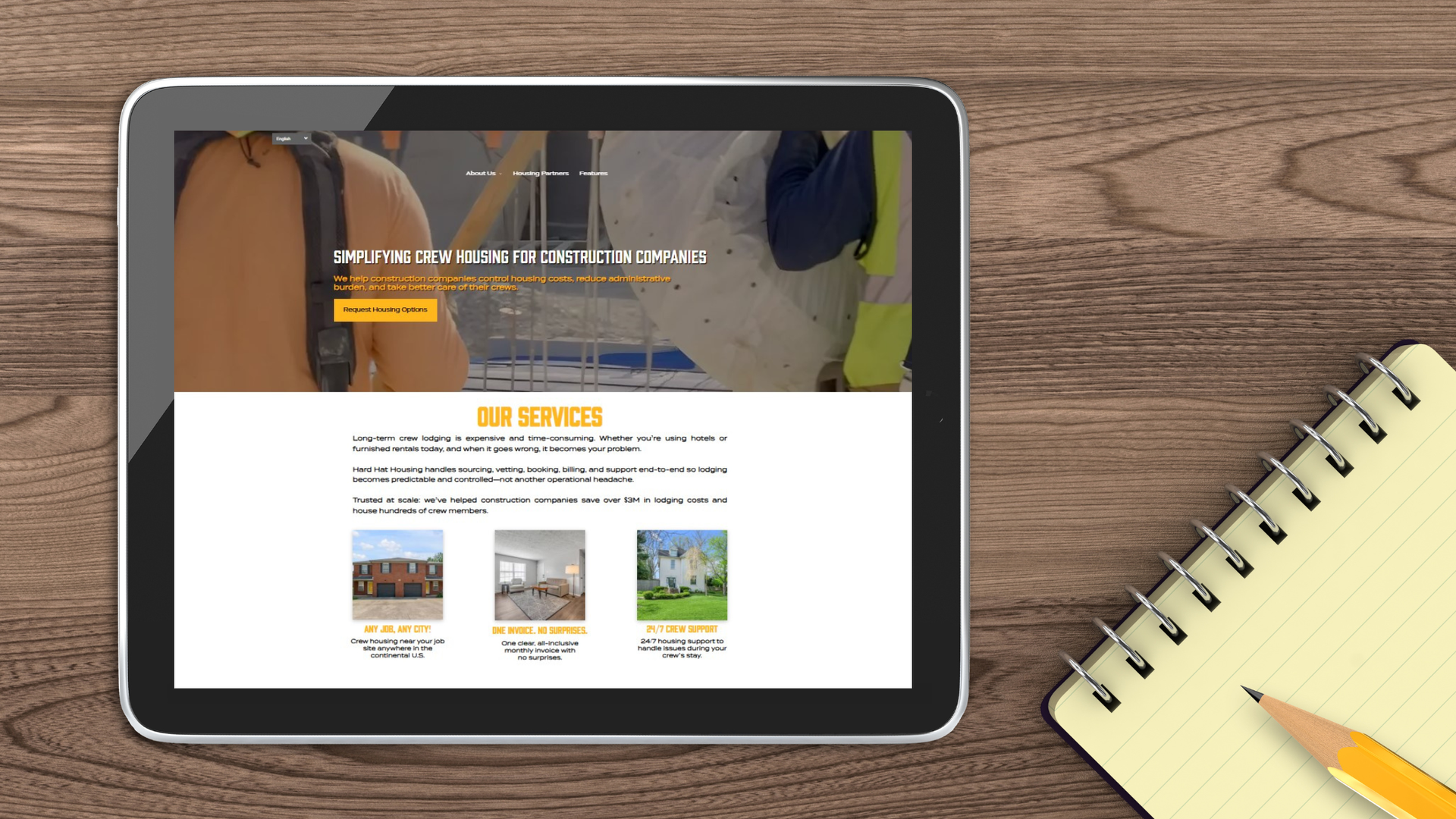
Hard Hat Housing is built specifically to connect property owners with reliable crew tenants. We focus on furnished mid-term rentals for stays of 30 days or longer. We sign the lease, pay the rent, and remain your point of contact during the stay.
Suitable properties are generally furnished single-family homes, townhomes, or multi-unit residences with:
- A full kitchen
- In-unit laundry
- Space for several work vehicles
- A safe and comfortable layout
- Convenient access to major routes or job sites
We coordinate cleaning during the stay and handle crew questions, which removes much of the day-to-day work for homeowners. You can read more about renting your home to construction crews with us.
The bottom line: renting to construction crews is worth considering if you own a furnished property in an active job market and prefer mid-term stays over constant turnover. Treat it professionally: use a written agreement, confirm local requirements, document the property's condition, set occupancy limits, and keep a clear maintenance process.
Want the benefits without handling every crew inquiry and project change yourself? Tell us about your property and we will let you know whether it fits crew housing in your area.
Submit Your PropertyPrefer to talk first? Call 859-249-8641 or email info@hardhathousing.com.