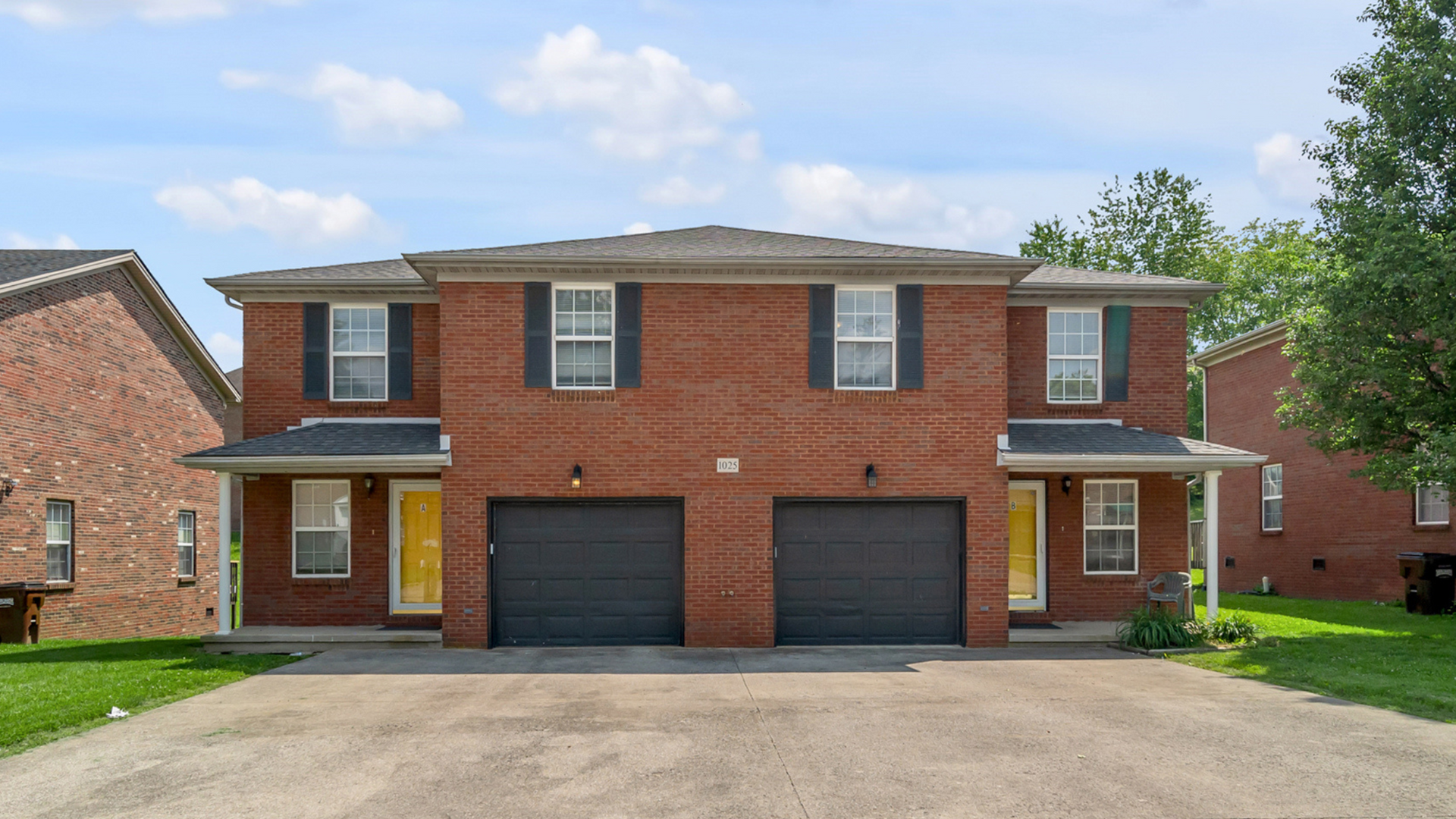

Your last crew house worked out fine. Good driveway, real beds, laundry that actually ran, twenty minutes from the site. So you go to book the next market and you find yourself starting over completely, scrolling listings, reading reviews written by people on vacation, trying to guess from eleven photos whether four grown men can live there for nine weeks without losing their minds.
Nothing you learned last time helped you this time. That is the actual problem.
Why a Good Booking Does Not Make a Good System
Most conversations about housing options for construction companies focus on the disasters. The host who cancelled three days before mobilization. The place with one bathroom and a broken dryer. Those stories are real, and they are worth telling, but they distract from something quieter and more expensive.
The quiet problem is that the good bookings do not compound. When a property works, you learned something about that one property and that one host. You did not learn anything you can apply in the next city, because the next city has a different owner with a different private idea of what clean means, what equipped means, and what is good enough for people who work ten hour shifts.
Every consumer rental listing is a separate negotiation with a stranger who has never had to meet your bar and has no particular reason to start. There is no shared definition sitting underneath the transaction. There is a photo set, a description written to attract bookings, and a price.
The Word "Standard" Is Doing a Lot of Work
It is worth being precise about what a standard actually is, because the word gets used loosely in the housing world.
A real standard has three properties. It is written down, so everyone means the same thing by it. It is measurable, so a property either meets it or does not. And it is enforceable, so failing it has a consequence.
Federal housing regulators spent years working this out. HUD's NSPIRE framework replaced two separate, inconsistent inspection systems with a single protocol built around objective, clearly stated deficiencies rather than judgment calls about appearance. The framework spells out affirmative requirements: a working primary cooking appliance, food preparation and storage space, a bathtub or shower usable in privacy, carbon monoxide alarms in the right places.
You may not run federally assisted housing. That is not the point. The point is what it takes to make quality repeatable. It took a written list, defined severities, and a process that produces the same answer in Ohio as it does in Texas.
Now compare that to how most construction crew lodging actually gets booked: a search, a filter, a gut read on photos, and hope.
What "Furnished" Means Depends on Who Wrote the Listing
Here is a test. Ask five hosts what a fully furnished, well-equipped property includes. You will get five answers, and none of them are wrong, because none of them agreed to anything in the first place.
One host counts a futon in the third bedroom as sleeping four. Another means four real beds in four rooms with doors. One means a stocked kitchen with pots, knives, and a full-size fridge. Another means a microwave, a coffee maker, and two pans. One includes a washer and dryer in the unit. Another means a coin laundry six blocks away, described in the listing as laundry access.
None of that variance shows up in the search filters. It shows up on move-in night, when your superintendent is texting you photos at nine PM and the crew has a six AM start.
A standard your crew can count on is not a nicer version of a good booking. It is a different kind of thing entirely, and you cannot get to it by booking more carefully.
The Cost Nobody Puts on the Invoice
The failure of a repeatable standard does not show up as a line item. It shows up in three places.
First, it shows up in your calendar. Every new market means starting the vetting process from zero. Someone on your team, usually someone whose job title has nothing to do with real estate, spends hours comparing listings, messaging hosts, and asking questions that should have been answered by a spec sheet.
Second, it shows up in rest. The connection between where crews sleep and how they perform is well established.
Those CPWR figures mean fatigue risk is built into a normal schedule before overtime even starts, and a peer-reviewed study of 206 workers found poor sleep is the norm rather than the exception. Housing conditions are one of the few inputs to that equation a company can actually control. Our breakdown of how living conditions intersect with safety and compliance goes deeper on this.
Third, it shows up in what you can promise. This is the one that stings. If quality swings market to market, you cannot tell a new hire what to expect. You cannot tell a superintendent what the standard is, because there is no standard, only whatever this particular booking turned out to be.
Why This Matters More in 2026 Than It Did in 2019
The labor math has changed. Associated Builders and Contractors projects the industry needs roughly 349,000 net new workers in 2026, climbing to about 456,000 in 2027. The AGC/Sage 2026 Outlook found 82 percent of firms struggling to fill hourly craft positions and 80 percent struggling with salaried roles, the highest levels in three years.
When workers are scarce, the experience of working for you becomes a recruiting variable. Crews talk. A tradesman who spent nine weeks in a house with no working laundry and a bedroom that turned out to be a converted den tells people. So does the one who got a clean, functional place every single time, in every market, because his company had a system.
Neither of those is a marketing message. Both are just what happened.
What Repeatability Actually Looks Like
The difference between finding good housing and having a standard is not effort. Companies that scroll listings are often working harder than companies that do not. The difference is structure.
| Booking Property by Property | Working From a Standard | |
|---|---|---|
| Quality definition | Set privately by each host | Written down once, applied everywhere |
| What carries forward | Nothing, each market restarts | The spec travels with you |
| When you find out | After the crew moves in | Before you commit |
| Who absorbs a miss | Your superintendent, at night | Handled before it reaches the crew |
| Scaling to a new market | Full restart | Same criteria, new location |
The right column is not a premium tier. It is a different operating model. In the first column, quality is something you discover. In the second, it is something you specify.
The Baseline Worth Defining
If you are building a spec for temporary housing for construction workers, these are the items that separate housing that works from housing that technically qualifies:
- One bed per person in a room with a door, not a headcount that requires a sofa
- A full kitchen: full-size refrigerator, working range, actual cookware, real counter space
- In-unit laundry, verified as working, not laundry access
- Off-street parking sized for work trucks and trailers, not a compact car driveway
- Commute inside a defined window, measured at shift-change traffic, not at noon
- Cleaning on a defined schedule, written into the agreement instead of left to goodwill
- One named person accountable when something breaks
Write it down. Apply it in every market. That list is the thing that carries over. Our guide to what makes a property crew ready and our comparison of housing types go into more detail on how these criteria play out across different property types.
Specialized Housing for Construction Teams Is a Category
The reason specialized housing for construction teams exists as a category is that consumer rental platforms were built for a different customer. They optimize for discovery, variety, and choice. Those are real virtues if you are picking a weekend rental. They work against you when what you need is sameness.
A construction company does not want variety in its crew housing. It wants the same functional baseline in Lexington, in Louisville, and in whatever market the next award lands in. Consistency is the product.
That is the shift worth making: to stop treating each booking as a fresh search, and start treating the specification as the asset. Two of our founders spent over twenty years in construction before this company existed, and we built our sourcing around that spec rather than around whatever happens to be listed.
The Honest Version
We are not going to claim there is no work involved in housing a crew. There is. Someone has to define the standard, and someone has to hold properties to it, in every market, before the crew arrives rather than after.
The question worth asking is not whether that work happens. It is whether it happens once, in a form that carries over, or whether it happens over and over, from scratch, by someone whose actual job is running your project.
If the quality of your crew housing swings from one job to the next, the missing piece is not a better search. It is a standard that travels with you. Give us a call and we will walk you through what ours looks like and how we hold properties to it.
Call 859-249-8641