
The Hours You Lose Before the First Hammer Swings
Here's the math that quietly determines whether your project comes in on schedule. A crew of ten people, housed 45 minutes from the job site. That's 90 minutes per worker per day on the road, 15 hours per day across the crew, 75 hours across a standard week, roughly 1,800 hours of human time burned on commuting alone over a six-month deployment. None of those hours show up on a timesheet as work. None of them produce output. But all of them get charged somewhere, in fatigue, in indirect overtime, in lost morning sharpness, in safety incidents that wouldn't have happened if the same workers had started the day fifteen minutes from the job.
The Running Total
This is what the industry quietly calls "commute creep." It's the slow, almost invisible drift between where housing is available and where the job site actually is. Each individual day, the drift is small. The crew shows up, gets the work done, gets back to the rental. But over weeks and months, the drift compounds into a measurable erosion of productive labor capacity, and most companies don't see it on the variance report until the project is already behind schedule.
What Commute Creep Actually Is
Commute creep happens because housing decisions and job site decisions get made at different times by different people. The project gets greenlit, the site gets locked in, and then someone has to find lodging in a market that may not have inventory next to the site at the price the budget allows. So housing gets booked progressively further out. Twenty minutes from the site, then thirty, then forty-five, then an hour. Each step happens for a reasonable-sounding reason, and each step adds a few minutes to every worker's day, every day, for the life of the project.
A study of construction settlement patterns found that construction workers tend to tolerate commutes of up to roughly 73 miles or 1.42 hours from the job site. Tolerate is a precise word. It does not mean "perform well at." It means "will accept rather than quit." The threshold of tolerance and the threshold of optimal performance are not the same number, and on long projects the gap between them is exactly where productivity quietly leaks out.
The Three Layers of Productivity Erosion
When you add a long commute to a long workday, the cost doesn't show up as one line item. It shows up in three different layers, none of which the project budget originally accounted for.
The hours themselves
This is the part everyone can do the math on, but most companies don't actually do. A 45-minute one-way commute is 1.5 hours of life per worker per day. Over a six-month project, that's roughly 180 hours per worker. For a 10-person crew, that's 1,800 hours of human time that produces no output. If those workers were paid even at a $40/hour fully loaded rate, the time itself represents $72,000 in human bandwidth that the project converted into asphalt.
The fatigue tax on the hours that remain
This is where it gets expensive. A worker who arrives at the site after a 45-minute commute is not the same worker who arrives after a 15-minute one. OSHA's worker-fatigue data shows that accident and injury rates run 18% higher on evening shifts and 30% higher on night shifts, with 12-hour days associated with a 37% increase in injury risk. A long commute on either end stacks on top of that workday, and the 1.62x injury-risk multiplier that sleep-deprived workers carry compounds with every hour that gets shaved off rest.
According to the National Safety Council's survey of construction employees, 77% cited demanding jobs as a fatigue reason, with long commutes flagged by 46% of respondents. That's nearly half the workforce naming the commute, specifically, as something eroding their capacity to do the work.
The commute crashes themselves
This is the layer most companies don't count until it happens. NIOSH lists motor vehicle crashes as the leading cause of work-related fatalities in the U.S. A 2005 study cited by OSHA found that every extended shift in a given month increased the risk of a motor vehicle crash on the commute home by 16.2%. The math is simple and grim: when you make crews drive long distances after long shifts, you are statistically pre-purchasing incidents. Some will be minor. Some will not be. A worker's drive home is the most dangerous part of their shift, especially when housing sits an hour from the site.
The combined picture is that long commutes are not a neutral logistical fact. They are a productivity, safety, and financial drain that grows linearly with project duration.
The Numbers Most Companies Don't Run
If you've never actually added it up for a real project, the totals tend to be larger than people expect. The math below uses a representative 10-person crew on a six-month deployment, with four different housing distance scenarios.
| Distance From Site | Daily Round Trip | Crew / Day | Per Worker (6 mo.) | Crew Total (6 mo.) |
|---|---|---|---|---|
| 15 min | 30 min | 5 hrs | 60 hrs | 600 hrs |
| 30 min | 60 min | 10 hrs | 120 hrs | 1,200 hrs |
| 45 min | 90 min | 15 hrs | 180 hrs | 1,800 hrs |
| 60 min | 120 min | 20 hrs | 240 hrs | 2,400 hrs |
The difference between 15-minute and 45-minute housing is 1,200 hours of human time, before counting fuel, mileage at the IRS 2025 rate of $0.70 per mile, the elevated incident risk, the morale tax, or the rest deficit. At $40 per hour fully loaded, those 1,200 hours represent $48,000 of additional labor cost on a single mid-sized project, and that's just the time portion. The full cost, once safety and fatigue effects are layered in, is materially higher.
Why "Available" Housing Is Not the Same as "Right" Housing
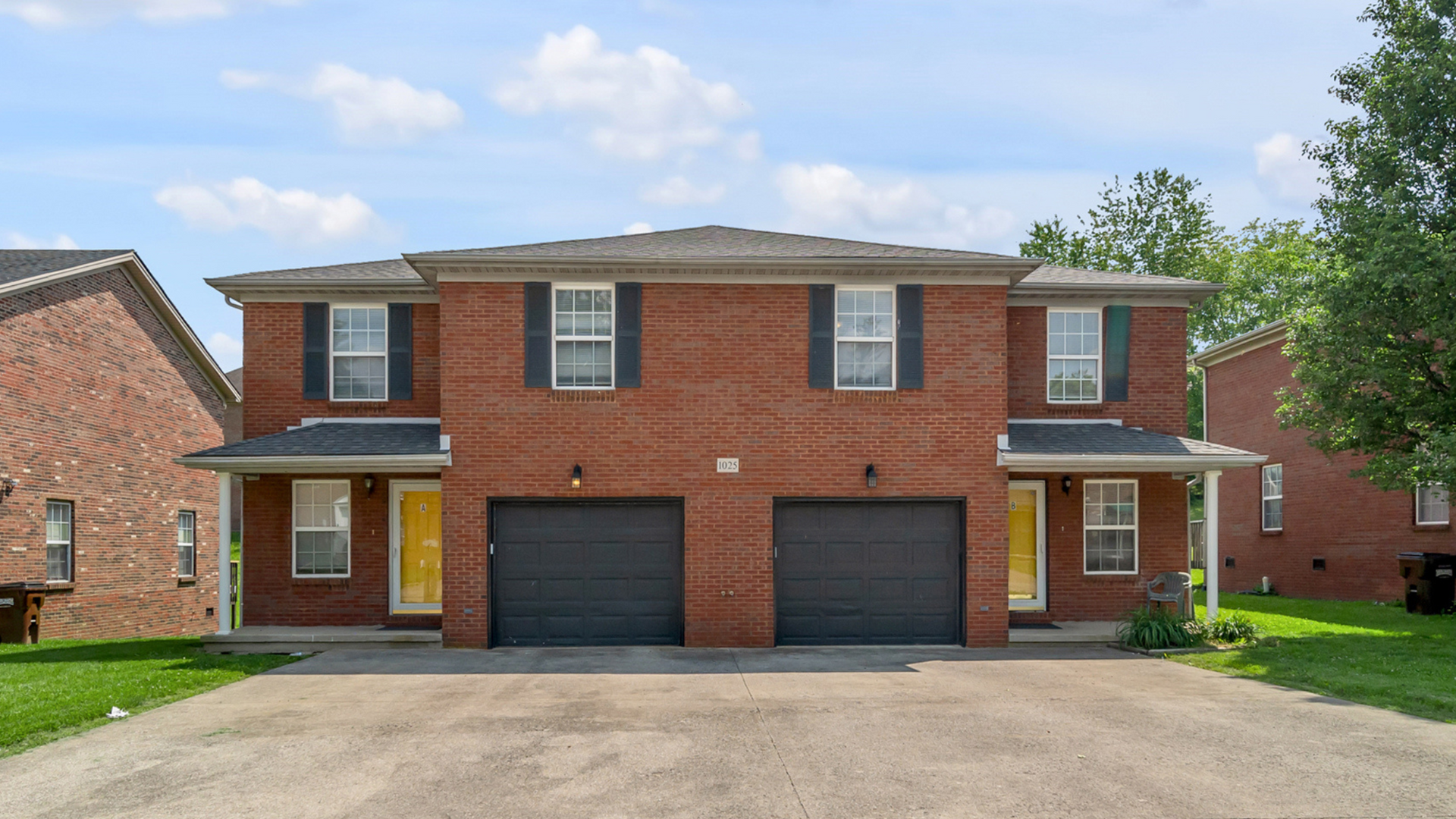
Most companies don't choose long-commute housing on purpose. They choose it because that's what was available at the price point when the project kicked off. The choice gets reframed as a cost-saving measure (the rate per night is lower farther out, after all), but the framing leaves out everything in the three layers above. The "savings" on the nightly rate get spent multiple times over on the commute hours that the cheaper housing forces every crew member to take.
The crew housing market has matured precisely because companies started noticing this. Housing that's structurally close to a job site, not just whatever was available within a 50-mile radius, changes the cost shape of the project. The hours come back. The fatigue declines. The mid-project safety incidents drop. And the project starts running closer to the schedule the original bid was based on.
How to Spot Commute Creep on Your Current Projects
The pattern is easy to miss if you only look at the housing line of the budget. It's much easier to see if you look at the wider picture. A few diagnostics that consistently surface commute creep:
Indirect overtime is climbing
Workers ending shifts later than the schedule allows, because they're trying to make up for slower morning starts. When the morning starts are slower because crews are pulling into the site already half-tired from the drive, the project pays for it on the back end.
Average daily productive hours per worker are quietly dropping
Not in any single dramatic way. Just a quarter-hour here, a quarter-hour there. By month three, the daily output looks structurally different from the bid assumptions, and nobody can quite point to a single cause.
Safety incidents cluster in the first hour and the last hour of the workday
This is the classic fatigue signature. Workers tired from the morning commute have incidents early; workers tired from the workday and looking ahead to the evening commute have incidents late.
Crew satisfaction surveys mention the drive
When workers cite the commute unprompted, you've already lost some of the morale buffer that retention depends on. Companies that have measured this internally consistently find commute distance is one of the top three predictors of mid-project turnover.
When two or three of these signals show up at once, you're not seeing isolated incidents. You're seeing structural commute creep. The fix isn't to push crews harder. The fix is to look at where they're sleeping.
What Proximity Actually Buys
The benefit of near-site housing isn't dramatic on any single day. It's compounding. The crew that sleeps 15 minutes from the job site gets back roughly 60 hours per worker over a six-month project, arrives sharper every morning, drives less in conditions where driving carries elevated risk, reports fewer incidents in the early and late hours of the workday, and feels less worn down by the deployment in general.
None of that is a productivity hack. It's just what happens when the housing line of the project budget is structured around proximity rather than nightly rate.
The companies that get this right tend to treat housing as a strategic input on the same level as equipment and materials. The companies that get it wrong tend to treat it as a logistics afterthought and then absorb the cost in places they don't measure.
The Conversation Worth Having With Your Project Manager
If you added up every commute hour across your last project, what would that number look like in lost productive labor? Once you put a real number on it, the conversation about what proximity is actually worth becomes a different conversation. Not "can we afford near-site housing?" but "can we afford to keep paying the commute creep tax?"
Send this to your project manager. Have the real version of that conversation before the next project kicks off. The numbers tend to make the case on their own.
If you want to stop paying the commute creep tax on your next deployment, we'd be glad to walk through what near-site housing actually looks like for your project.
Talk to Us About Housing