What Stable Rental Occupancy Actually Feels Like
Think about the last tenant relationship that worked. Not the income, not the lease length, just the payments themselves. Did rent show up on time, in full, without you having to send a reminder? Did the property stay occupied through months you used to dread, the slow seasons, the months between summer bookings, the gap after a tenant left?
That quiet predictability, month after month, is what stable income actually feels like in practice. It's not knowing the future. It's not having to chase the present.
If you've been renting long enough to have lived through both versions of this experience, you already know the difference is bigger than the spreadsheet shows. A rental that stays occupied isn't just earning more money than one that doesn't. It's earning attention back. The mental space you used to spend on listings, showings, turnover calls, and quietly worrying about the next vacancy starts to come back to you. The property starts to recede into the background of your life, which is where most homeowners wanted it to be in the first place.
This is what occupancy stability does. And it's worth talking about honestly, because it's the part of rental ownership that almost never gets covered in the income articles.
Occupancy Is the Variable That Quietly Drives Everything Else
Most rental analyses lead with rent, mortgage, taxes, and ROI percentages. Those numbers matter, but they all rest on a quieter assumption: that the property is occupied. When occupancy is stable, the financial story you tell about the rental holds together. When it isn't, every other number in the spreadsheet starts to wobble.
The U.S. Census Bureau's Q1 2026 Housing Vacancies and Homeownership report puts the national rental vacancy rate at 7.3%, essentially unchanged from a year earlier. That's the average. Some markets and some property types run well above it. And the average obscures the more important reality for an individual homeowner: even one extended vacancy in a year can quietly erase the financial cushion that several months of strong occupancy built up.
The cost of those gaps is well documented. Industry analyses from Apartments.com, Buildium, and several property management benchmarks place average turnover costs in the $1,000 to $5,000 range per unit, with more recent industry reports putting the average closer to $3,872 once lost rent, cleaning, repairs, marketing, and administrative time are added up. Some sources cite total turnover cost as the equivalent of up to three months' rent on a unit, depending on how long the vacancy lasts and how much make-ready work is required. A full vacancy cost calculation includes lost rent, lease-up incentives, turnover expenses, marketing, utilities, and admin labor, all of which keep running while the unit sits empty.
7.3%
National rental vacancy rate, Q1 2026 (U.S. Census Bureau)
$3,872
Average tenant turnover cost in recent industry reporting
2-4 wk
Typical vacancy period between tenants nationwide
Stable occupancy is the variable that prevents most of those costs from ever showing up. Fewer vacancies, fewer turnovers, fewer line items on the wrong side of the ledger.
What Stability Actually Changes Day to Day
The financial case for stable occupancy is obvious enough. The lived experience is less obvious, and it's often where homeowners feel the difference most. A few of the quieter ways stable occupancy reshapes the rental experience:
- You stop checking the calendar. When occupancy is unstable, the booking calendar becomes a small source of background anxiety. Every Sunday, every end-of-month, every weather forecast that might affect a vacation booking. Stable occupancy turns the calendar into a non-event. You know who's in the property and you know how long they're staying.
- You stop pricing decisions in your head. Properties with high turnover require constant pricing decisions. Raise rates for the high season. Drop them in the off season. Match a competitor who just listed nearby. Stable occupancy locks in a known rate for a known stretch. The pricing decision happens once, not weekly.
- You stop dreading the phone. Most tenant calls are about access, maintenance, or moving logistics. The more turnovers you have, the more of those calls hit your phone. Fewer transitions mean a quieter phone, and a quieter phone is one of the underrated luxuries of stable occupancy.
- Repairs become projects, not emergencies. When the property is consistently occupied by the same tenant or group, you can schedule maintenance in a way that works for everyone. Roof repair this fall, kitchen upgrade next spring. With heavy turnover, repairs happen in frantic windows between move-outs and move-ins, and the timeline is always too short.
- You start trusting the income. This is the part that takes a while to fully recognize. After several months of consistent payments, your brain stops bracing for the next disruption. The property's income starts to feel like a baseline you can rely on, not a variable you have to monitor. That shift, more than any specific dollar amount, is what most homeowners are actually looking for when they say they want a stable rental.
Why Project-Based Tenants Produce Stable Occupancy
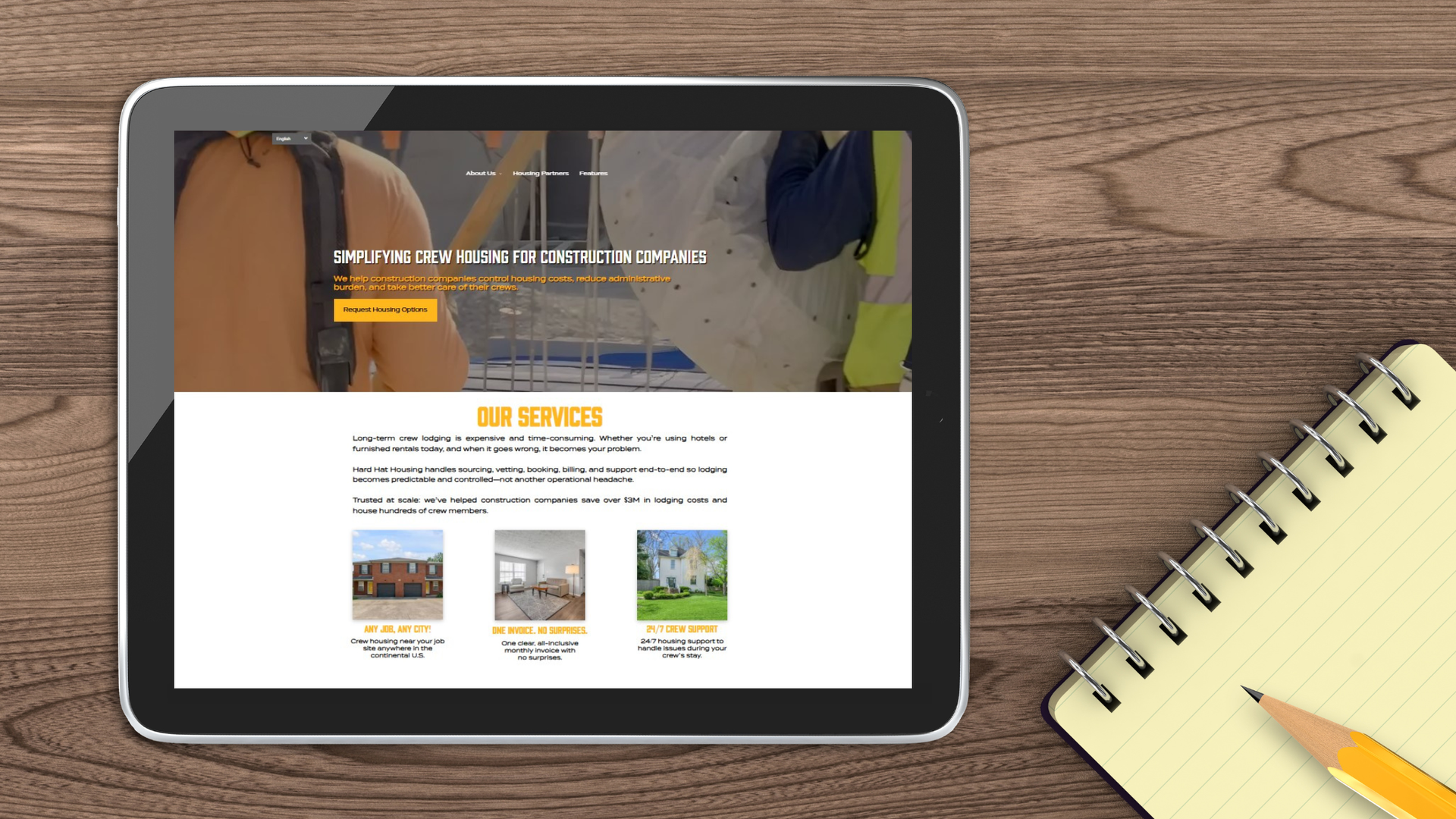
Hard Hat Housing places construction crews into homeowner-owned rentals for the duration of a project. That sentence sounds straightforward, but the structural implications for occupancy are significant.
A construction project has a defined start date, a defined end date, and a defined housing need across that span. When a crew arrives, they're not arriving as guests for a long weekend or signing a 12-month lease they may break early. They're moving in for the duration of the work. That means your property is occupied continuously from move-in to project completion, without the gaps that vacation rentals build in or the renewal anxiety that traditional leases introduce.
There's a quiet operational benefit to this structure that doesn't show up in marketing copy: the tenant has zero reason to leave early. The work hasn't finished. The crew is here for the build. Their housing aligns with their job, and the job aligns with your income.
Hard Hat Housing's homeowner partnership model is built around exactly this alignment, with crew placements that match your property to active project timelines.
What Stability Doesn't Mean
A worthwhile clarification before going further: stable occupancy doesn't mean permanent occupancy, and it doesn't mean zero transitions. Even the best-run rental will see a tenant move out eventually. Stable occupancy means the transitions are infrequent, predictable, and planned, rather than constant and reactive.
The difference shows up in how transitions feel. A planned transition, where you know the move-out date weeks or months in advance and have a likely next placement already lined up, is a logistical event. An unplanned transition, where a tenant gives short notice, a booking falls through, or a property sits empty while you scramble to relist, is a stressful event with real costs attached.
Buildium's tenant retention guidance notes that the renewal conversation should start 90 to 120 days before lease end, partly because that lead time is what converts what would otherwise be an unplanned transition into a planned one. Project-based stays carry the same logic built in: the project end date is the move-out date, known in advance, with time to plan what comes next.
The Compounding Effect of Low Turnover
The financial difference between high and low turnover compounds over time in ways that often surprise homeowners.
| Metric | High Turnover | Low Turnover |
|---|---|---|
| Annual turnover events | 6 to 12+ | 1 to 3 |
| Lost rent days per year | 30 to 60+ | 0 to 14 |
| Cleaning and make-ready spend | $3,000 to $8,000+ | $500 to $1,500 |
| Marketing and listing time | High and recurring | Low and infrequent |
| Property wear acceleration | Significant | Minimal |
| Homeowner time investment | Hours weekly | Hours quarterly |
The bottom row matters as much as the top. Time you don't have to spend on the rental is time you get back. Stable occupancy is one of the few rental decisions that buys you both higher net income and more of your own week.
What Loyalty to the Stable Path Actually Looks Like
For homeowners who have been in the rental world long enough to compare experiences, the appeal of stable occupancy isn't theoretical. It's the version of property ownership that does what you originally hoped it would do.
For homeowners who have explored crew housing, the consistent feedback is some version of "this is what I wanted renting to feel like." Less calendar management, less pricing analysis, less worry, more predictability. The income happens, the property gets cared for, the tenant moves out on schedule, and the next placement starts with the same structure.
Hard Hat Housing's role in that structure is straightforward. We place vetted crews on project-aligned timelines, handle the placement and communication, and keep the homeowner informed of what's happening at the property without making them the day-to-day point of contact. The hassle-free side of crew housing is real, and stable occupancy is the underlying mechanism that makes it real.
For homeowners new to the model, the appeal is usually the same: a property partner that places the right tenants, for the right duration, with the operational support to keep things running quietly in the background.
The Quiet Version of a Good Rental
Most of the rental ownership advice on the internet focuses on optimizing peak income. The quieter goal, the one most homeowners actually came to the rental for, is having a property that performs reliably without dominating your attention. Stable occupancy is the structural foundation of that quieter version. It's the difference between owning a rental and managing one.
If you've already experienced what stable occupancy feels like with our team, you know the shape of it. If you're noticing your current rental setup has been pulling more of your attention than you expected, that's usually a signal that occupancy stability is missing from the equation, and worth examining.
Talk to Our Team
Our team is always happy to talk through what a more stable occupancy pattern could look like for your specific property, whether that means adjusting an existing placement, planning for the next one, or exploring whether crew housing is the right fit in the first place.
Talk to Our Team