
When a Tenant Text Makes You Brace Yourself
You know the feeling. The phone lights up, you see the name on the screen, and before you even read the message, your shoulders tighten. You start running scenarios in the half-second before your eyes focus on the actual text. Is it the rent again? Is something broken? Is it that thing they didn't ask permission for last month? You haven't even read the message and you've already had three small versions of the same conversation in your head.
This is not the same thing as having a bad tenant. A bad tenant is one specific, identifiable problem you can eventually solve. What you're describing is something different. It's the slow exhaustion of never knowing which version of "tenant" you're going to get this week. The rent is on time, then it's three days late, then it's on time again with no explanation. The lawn looks great for a month, then suddenly there's a dog you weren't told about. The communication is friendly for a stretch, then goes silent when you need a response. The behavior isn't consistently bad. It's just inconsistent, and that inconsistency is the part doing the real damage to your week.
The Frustration That Doesn't Get Talked About
When homeowners share their tenant horror stories at dinner parties, the loud stories get most of the airtime. The eviction. The flood. The neighbor calling the cops. What rarely gets talked about is the quieter version: the tenant who is mostly fine, technically not in violation of anything, and yet somehow keeps your nervous system on a low simmer week after week.
The data on landlord burnout backs this up. Property management research consistently identifies inconsistent tenant communication as one of the top contributors to landlord stress, alongside late payments and unexpected maintenance demands. The bigger category (rarely measured because it doesn't show up on incident reports) is the steady tax of unpredictability that comes even from tenants you wouldn't technically classify as a problem.
The result is what burnout researchers call decision fatigue. When you can't predict the next interaction, your brain doesn't get to fully close the loop on the previous one. The loop stays open. The mental tab stays loaded. And by the end of a year of that, you've lost dozens of hours of actual mental bandwidth to a property that's supposedly running fine.
What Inconsistent Tenant Behavior Actually Looks Like
It rarely looks like one big thing. It looks like a pattern of small, slightly-off events that don't individually rise to the level of a complaint but collectively change the texture of your week.
The rent that's not always on time
Not always late. Not always on time. Sometimes the 1st, sometimes the 4th, sometimes the 7th with no message about why. You can't budget around it. You can't predict it. You start checking your bank account on the 1st more anxiously than you used to.
The communication that comes and goes
They responded within an hour last month. This month, they've been ghosting for three days on a maintenance question that needs an answer. You have no idea why. You haven't done anything different.
The rules that drift quietly
The lease said no pets. There's a dog now, but only sometimes, and you're not totally sure if it lives there or visits. The lease said two occupants. You drove by and counted four cars in the driveway last Sunday. You don't have a smoking gun. You just have a feeling that the agreement has slid.
The maintenance reports that show up late
That water stain on the ceiling? They've known about it for two months and just mentioned it this week, when it's now a bigger repair than it would have been. Nothing malicious. Just delayed in a way you can't plan around.
The vibe shifts you can't quite name
Sometimes the tenant is warm and easy. Sometimes they seem annoyed for reasons that have nothing to do with you. You start adapting your communication style to whichever version is replying that week.
None of these crosses the line into "I need to do something about this." All of them, added up, mean your relationship to the property is reactive instead of stable.
Why This Quietly Drains More Than Bad Tenancies Do
Here's the counterintuitive part. A genuinely bad tenant gives you something to act on. The lease is violated, you document it, you give notice, you take action. It's exhausting, but it ends.
An inconsistent tenant gives you nothing to act on. There's no clear violation. There's no documentable pattern. There's just the steady drip of small misalignments that you can't escalate without feeling like you're overreacting. So you absorb them. And then you absorb the next batch. And the next. The drain is slower but goes on for longer, and most homeowners don't realize how much of their week it's quietly eating until they finally don't have to deal with it anymore.
Property management writers describe this as the "always on" tax of self-management. Even when nothing is actively going wrong, the mental space the property occupies doesn't shrink, because you can never be sure when it's about to need you. The phone could buzz at any moment with something that's not technically a crisis but still requires emotional bandwidth to handle.
Why Inconsistency Happens (And It's Not Always Personal)
Most inconsistent tenants are not trying to be difficult. The patterns usually trace back to one of a few causes, and recognizing them helps the situation feel less personal even when it doesn't fix it.
| The tenant's own life is unpredictable | A job that doesn't pay on a regular schedule. A health issue. A relationship problem. A second job that came and went. Their inconsistency is a downstream effect of their week, not a statement about you. |
| Expectations were unclear from the start | If the lease wasn't specific about pet policy, occupant limits, or maintenance response times, the tenant fills in the blanks with their own assumptions. Their behavior isn't actually inconsistent; the rules just weren't tight enough for a single interpretation. |
| There's no buffer between you and them | When the tenant has only one contact (you), every minor issue lands on you personally and gets your personal style of response, which varies depending on your week too. The relationship becomes a two-person feedback loop where both sides drift. |
| The rental model invites variability | Some rental categories (vacation rentals, short-term Airbnbs, traditional month-to-month residential) come with built-in unpredictability because the tenant population, motivation, and stay duration all vary by booking. |
The point is not to blame the tenant or yourself. The point is that the inconsistency is usually structural, and structural problems have structural solutions.
What a More Predictable Tenancy Actually Feels Like
Most homeowners who have moved from an inconsistent setup to a more structured one describe the change the same way: it isn't dramatic. It's quiet. The phone stops buzzing in the middle of the day. The rent shows up on the same date every month, without thought. The communication that does happen is brief, polite, and on a clear thread. You stop bracing yourself before opening messages, because the messages stop being surprises.
This is what the brief at the top of this article gestured at. The exhaustion isn't from one bad tenant. It's from never knowing which version of "tenant" you're going to get next. Once that uncertainty is removed, you get back not just hours of your week, but the kind of low-level mental presence you didn't realize you were spending on the property at all.
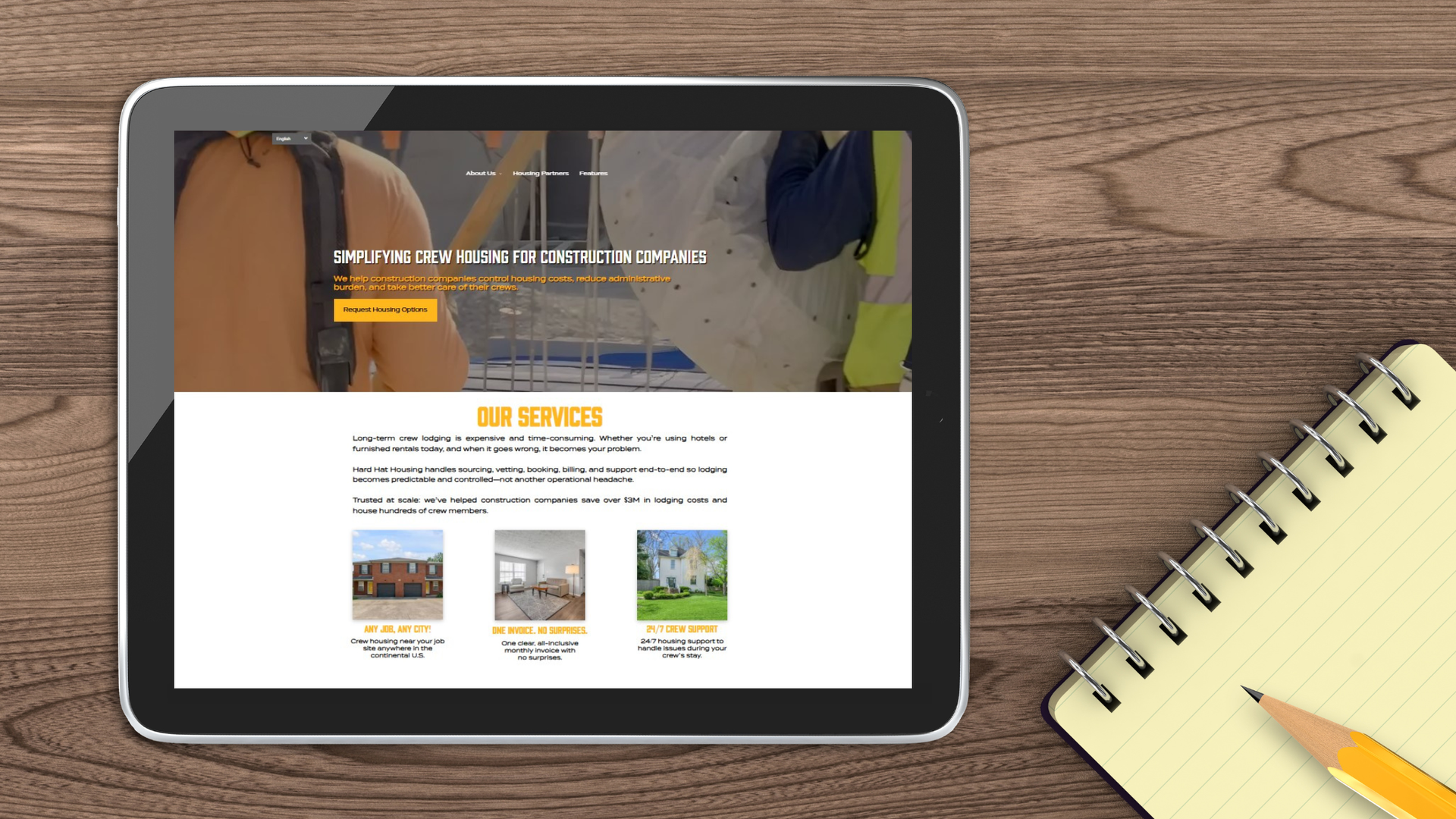
Tenants who are placed through a structured channel (crew tenants on a multi-month work assignment, for example) tend to be more predictable for structural reasons. They have a defined reason to be there, a defined timeframe, an employer with skin in the game, and a housing partner mediating the day-to-day. The variability that used to come from individual tenant moods or unpredictable life events is mostly absorbed by the structure around the placement. The result is a tenancy where consistency is the default, not the exception.
A Quick Mental Audit
Take thirty seconds and answer these honestly
When was the last time your tenant communication surprised you?
Not in a bad way necessarily, just in a "huh, didn't expect that" way. If it was this week, you're in a high-variability tenancy.
When you check your bank account on rent day, what's your default expectation?
If you're surprised when it's there on time, the relationship has trained you to expect inconsistency.
How much of your "I should follow up on the house" thinking happens spontaneously, with no specific trigger?
If it's frequent, the property is occupying mental bandwidth you're not getting paid for.
None of these are judgments. They're just diagnostic. They tell you whether your current setup is asking too much of your nervous system, and whether a different shape of tenancy would give you back something the spreadsheet doesn't capture.
The Real Cost Most Homeowners Don't Count
When homeowners do the math on a rental, they count income, mortgage, taxes, maintenance, and maybe vacancy. They almost never count the mental cost of the relationship itself. That cost is real. It shows up as worse sleep on rent week, as distracted dinners on the nights a maintenance text came in, as the slow erosion of the original reason they got into renting in the first place. A structured housing partnership absorbs most of that mental cost before it ever reaches your phone.
The fix isn't to become a tougher landlord or to send more lawyerly emails. The fix is usually structural: a different tenant profile, a clearer set of expectations, a buffer between you and the day-to-day. When those three things line up, the inconsistency that was draining your week stops being the dominant texture of owning a rental.
If This Sounded Familiar
If you opened this article and recognized your own week in any of the descriptions, the first useful thing is to name it. What you're carrying isn't a "bad tenant problem." It's an inconsistency problem, and inconsistency problems don't solve themselves through tougher rules or more patience. They solve themselves through structure.
Think about how much of your week the uncertainty quietly eats up. Then ask whether the income you're generating still feels worth it once you put a number on the hours of life it's costing. For most homeowners who do this calculation honestly, the answer is yes, the income is still worth it, but only if the structure changes.
If a more predictable tenant rhythm sounds like the change you've been needing, we'd be glad to walk you through what that actually looks like for your property.
Tell Us About Your Property