Construction projects rarely stay close to a company’s headquarters. Whether a crew is building a hospital, expanding a manufacturing facility, installing utility infrastructure, or working on a large commercial development, employees may need to live away from home for weeks or months at a time.
For construction companies, arranging that lodging is more than an administrative task. Housing affects project costs, worker fatigue, morale, productivity, safety, and the company’s ability to keep reliable crews in the field.
This guide explains the main types of construction crew housing, what workers need from temporary lodging, how costs are structured, and how to choose the right housing provider for projects lasting 30 days or more.
What Is Construction Crew Housing?
Construction crew housing is temporary, furnished lodging arranged for construction workers who are assigned to a project away from their primary residences.
It may be used by a small group of specialized workers or by hundreds of employees supporting a major infrastructure or industrial project. The housing can include hotel rooms, extended-stay suites, furnished apartments, single-family homes, modular units, or larger workforce-housing communities.
The key distinction is duration
Construction crew housing typically serves workers who need accommodations for 30 days or longer, rather than guests staying for a few nights during business travel. Projects may last several months or even multiple years, and crew sizes may change as work progresses.
Longer assignments create different housing requirements. Workers need more than a bed and a place to store equipment. They need functional kitchens, laundry facilities, parking, privacy, reliable internet, comfortable common areas, and a stable place to return to after demanding shifts.
For construction companies, the goal is to provide practical, cost-effective housing that supports the project without creating unnecessary logistical work.
Why Housing Matters for Construction Companies
Cost control
Housing can become one of the largest non-payroll expenses associated with a remote project. Booking individual hotel rooms night after night may be convenient, but the total cost can rise quickly when a crew stays for several months.
Companies must also account for taxes, parking, meals, housekeeping fees, transportation, furniture, utilities, and administrative time. A housing arrangement that looks inexpensive on a nightly basis may become costly when multiplied across a large crew and a long project schedule.
Longer-term furnished housing may offer better value by replacing multiple hotel rooms with a home or apartment that accommodates several workers. Shared kitchens can reduce meal expenses, while on-site laundry can eliminate repeated laundry and service charges.
A well-planned housing strategy also helps companies forecast expenses more accurately. Instead of managing changing nightly rates, construction managers may be able to negotiate a consistent monthly rate for the expected assignment period.
Productivity
Workers who sleep well and have a comfortable place to recover are better positioned to perform safely and effectively. A cramped room, unreliable internet connection, inconvenient parking situation, or long commute can create daily friction that affects the entire crew.
Appropriate housing supports productivity by:
- Reducing travel time between lodging and the job site
- Giving workers access to kitchens and regular meals
- Providing space to rest between shifts
- Offering reliable internet for personal and work-related needs
- Making it easier for crews to stay organized
- Reducing the stress of frequent moves
Housing location is especially important when projects operate on early shifts, extended shifts, or rotating schedules. A property that is only a few miles closer to the site may save substantial time when multiplied across many workers and many workdays.
Safety
Construction is a safety-sensitive industry. Fatigue, long commutes, and poor living conditions can increase the likelihood of mistakes and accidents.
Safe crew housing should support adequate rest and provide a clean, secure environment. Workers need functioning locks, safe parking, properly maintained utilities, and enough sleeping space for the number of occupants. Companies should also consider whether the property is located in an area where employees can comfortably arrive and depart at different hours.
Reducing unnecessary driving is another safety benefit. When crews live close to a job site, they spend less time on the road before and after demanding shifts. This can be particularly valuable for projects in rural areas or locations with limited transportation options.
Retention and morale
Long assignments can be difficult for workers and their families. Housing that feels temporary in the worst sense—crowded, uncomfortable, or poorly maintained—can contribute to dissatisfaction and turnover.
By contrast, clean and livable accommodations show employees that the company has invested in their well-being. A furnished home with a kitchen, living area, laundry, and adequate privacy can feel significantly more sustainable than a hotel room for a multi-month assignment.
Better housing may help companies:
- Attract skilled workers to remote projects
- Encourage employees to accept longer assignments
- Improve morale during demanding project phases
- Reduce complaints and housing-related distractions
- Build loyalty among traveling crews
For companies competing for specialized labor, housing can be an important part of the overall employment offering.
Types of Construction Worker Housing
Hotels and extended-stay hotels
Hotels are often the simplest option for short assignments or emergency placements. They provide predictable booking processes, front-desk support, housekeeping, and amenities such as breakfast, fitness centers, and business facilities.
Extended-stay hotels add features that are more useful for longer stays, including kitchenettes, refrigerators, microwaves, and larger living areas.
Hotels may work well when
- The assignment is short or the end date is uncertain
- The crew needs immediate housing
- Workers require individual rooms
- The project is located near a hotel market
- The company values daily housekeeping and on-site services
However, hotels can become expensive for stays lasting 30 days or more. Rooms may offer limited privacy and storage, and even extended-stay units may not provide a full kitchen, laundry facilities, or enough space for workers who are living away from home for several months.
For a side-by-side look at costs, space, parking, and billing, read our full comparison of crew housing vs. hotels for construction teams.
Short-term rentals
Short-term rental platforms offer a broad selection of houses, apartments, and condos. They can be useful for small crews that need a furnished property quickly.
The main advantages include flexibility, varied locations, and the possibility of finding homes with kitchens, multiple bedrooms, and private laundry facilities. A short-term rental may also provide a more residential environment than a hotel.
Companies should review the terms carefully, however. Some properties have strict occupancy rules, variable pricing, cancellation policies, cleaning charges, and limits on extensions. Availability can also be inconsistent in markets where activity is high.
Other considerations include
- Whether the host permits business or workforce stays
- Whether the property can accommodate the entire crew legally
- How maintenance issues are handled
- Whether the lease can be extended
- Whether the rate remains stable for the full assignment
- Whether the property has sufficient parking
Short-term rentals can be effective, but construction companies may need longer bookings for large projects.
Mid-term rentals
Mid-term rentals are designed for stays that are longer than a typical vacation but shorter than a conventional year-long lease. This makes them well suited to construction assignments lasting 30 days or more.
A furnished home can offer
- Multiple bedrooms
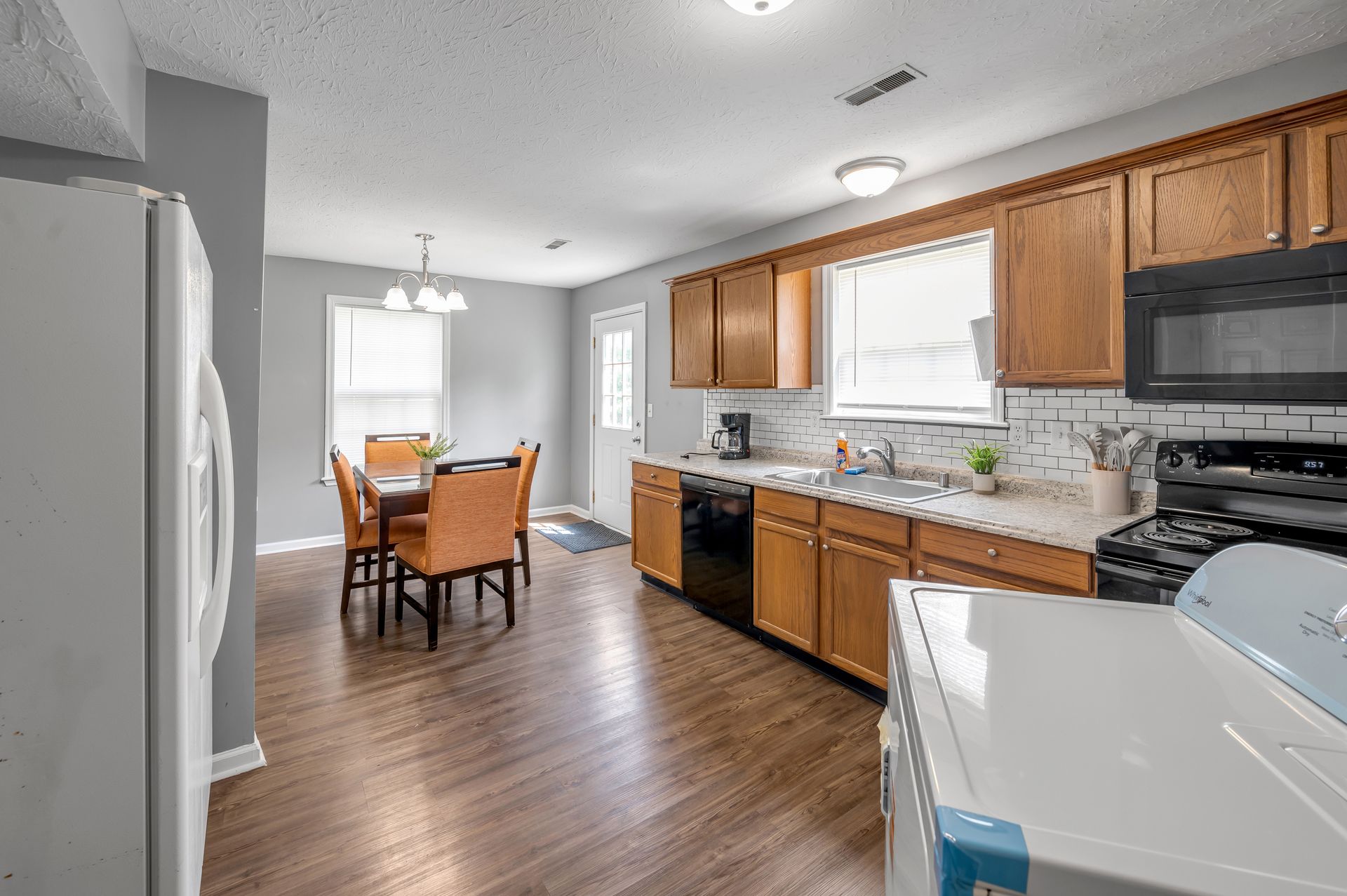
- Full kitchens
- Living and dining areas
- In-home laundry
- Dedicated parking
- More privacy than shared hotel rooms
- Space for personal belongings and work gear
- A residential environment for longer stays
This model is especially useful when a company wants to house several workers together while avoiding the limitations of a hotel. It can also simplify administration by giving the company one housing arrangement rather than managing many individual rooms.
Mid-term housing is often a strong fit for project managers who know the expected assignment length but need flexibility around changing schedules. The company may need housing for a few months, extend the stay as the project continues, or adjust the number of homes as different trades arrive and depart.
Man camps and modular workforce housing
Man camps and modular workforce-housing communities are commonly used for very large, remote, or infrastructure-focused projects. They may include prefabricated sleeping units, dining facilities, recreation areas, laundry buildings, and other shared services.
These arrangements can be effective when a project requires housing for hundreds of workers in an area with limited residential inventory. They are often associated with energy, mining, transportation, disaster recovery, and major public infrastructure work.
The benefits may include scalability, centralized management, and proximity to remote job sites. The disadvantages can include a more institutional living environment, limited privacy, complex permitting, and substantial setup costs.
For some projects, modular housing is the only practical solution. For others, a combination of furnished homes, apartments, and hotels may provide a better balance of comfort, flexibility, and cost.
What Construction Crews Need From Their Lodging
Construction workers have practical needs that differ from those of occasional business travelers. They may work long shifts, carry equipment, arrive at unusual hours, and share housing with colleagues for extended periods.
Housing should be clean, safe, functional, and close enough to the job site to keep commuting manageable. It should also accommodate the realities of construction work, including work clothes, boots, tools, vehicles, and changing schedules.
Construction crew housing must-have checklist
Before selecting a property or provider, confirm that the lodging includes:
- Reliable heating and cooling
- Comfortable beds and adequate sleeping capacity
- A full kitchen or practical meal-preparation area
- Refrigerator and freezer space
- In-unit or easily accessible laundry
- Reliable high-speed internet
- Adequate parking for crew vehicles
- Safe entry points and functioning locks
- Enough bathrooms for the number of occupants
- Storage for clothing, luggage, tools, and equipment
- A living area where workers can relax
- Reasonable proximity to the job site
- Clear occupancy and house rules
- Responsive maintenance support
- Transparent pricing and fees
- Flexible extension options
- A documented move-in and move-out process
Companies should also think about crew composition. A group of four workers may be comfortable sharing a home with two bathrooms, while a larger group may need separate properties or more extensive facilities. Privacy expectations, gender considerations, shift schedules, and seniority may all affect how rooms should be assigned.
How Much Does Crew Housing Cost?
The cost of construction crew housing depends on the location, project duration, number of workers, property type, season, and level of service.
Hotels are often priced per room and per night, which can make costs rise quickly for larger crews. Furnished homes and mid-term rentals are commonly priced by the property and rental period, allowing several workers to share the same accommodation.
Important cost factors may include:
- Base rent or nightly rate
- Number of bedrooms and bathrooms
- Utilities
- Internet
- Cleaning fees
- Security deposits
- Taxes
- Parking
- Furniture
- Pet or occupancy charges
- Transportation requirements
- Maintenance and support
- Extension or cancellation terms
A useful comparison should consider the total cost per worker, not just the advertised rate. A slightly higher rental price may still be more economical if it houses more workers, includes utilities, reduces commuting, and provides a kitchen and laundry facilities.
Construction companies should request an itemized quote and confirm whether the rate covers the entire assignment. They should also ask how pricing changes if the project is extended or the crew size changes.
Per Diem vs. Company-Provided Housing
Per diem
Per diem gives workers a housing and meal allowance so they can arrange their own accommodations. This approach can reduce administrative work for the company and give employees flexibility.
However, per diem does not guarantee that suitable housing will be available. Workers may select different properties, create inconsistent commuting arrangements, or struggle to find affordable lodging in a tight market. During busy construction seasons, local demand can push rates beyond the allowance.
Company-provided housing
Company-provided housing gives the employer more control over location, quality, occupancy, and cost. It can also make it easier to place crews together and ensure that workers have the amenities required for a long assignment.
The best approach depends on the project and workforce. Some companies use per diem for individuals who prefer to arrange their own lodging, while others provide housing for larger crews, remote assignments, or projects in high-cost markets. A hybrid policy may offer the most flexibility.
Housing for Large Construction Projects
Large projects require a housing plan that accounts for changing workforce needs. A project may begin with a small preconstruction team, expand during peak building activity, and then taper as trades complete their scopes.
Multiple homes
Rather than placing an entire crew in one large property, companies may use several furnished homes located near one another. This can improve privacy, reduce overcrowding, and make it easier to house workers according to trade, shift, or supervisory structure.
Multiple homes also create redundancy. If one property becomes unavailable, the company may be able to relocate only part of the crew rather than disrupting everyone.
Phased crew sizes
Housing should be planned around the project schedule. The number of workers needed during site preparation may differ substantially from the number required during installation, finishing, commissioning, or closeout.
A good provider should help the company:
- Add properties as staffing increases
- Reduce inventory as crews demobilize
- Extend housing when schedules change
- Coordinate staggered move-in dates
- Reassign homes between project phases
- Avoid paying for unused capacity
Advance planning is particularly important in markets with limited furnished housing. Reserving suitable homes early can prevent last-minute hotel costs and long commutes.
Infrastructure jobs
Infrastructure projects often take place in rural or underserved areas where hotels and apartments are limited. Road construction, bridge work, utility installation, renewable-energy projects, and industrial expansions may require workers to remain in the area for months.
For these assignments, companies should evaluate the distance to the worksite, road conditions, parking capacity, grocery access, medical services, and availability of reliable internet. In remote locations, a property that appears close on a map may involve a difficult or time-consuming commute.
A housing provider with experience supporting construction teams can help identify practical options and coordinate multiple properties when ordinary lodging inventory is not enough.
How to Choose a Construction Crew Lodging Provider
The right provider should understand construction schedules and the realities of traveling crews. Before signing an agreement, ask the following questions:
- Do you specialize in stays of 30 days or longer? A provider focused on vacation rentals or nightly bookings may not be equipped for extended workforce housing.
- Can you house the full crew? Confirm whether the provider can arrange multiple homes, coordinate nearby properties, or support large workforce requirements.
- How close are the properties to the job site? Compare realistic driving times, not only mileage.
- What is included in the rate? Ask about utilities, internet, furniture, cleaning, parking, deposits, and maintenance.
- How flexible are extensions and reductions? Construction schedules change. The housing agreement should account for delays, early completion, and phased demobilization.
- How are maintenance problems handled? Clarify response times, emergency contacts, and responsibility for repairs.
- Are the properties properly furnished and equipped? Confirm bedroom arrangements, kitchen equipment, laundry, parking, and storage.
- Is the pricing transparent? Request a complete quote without unexpected service charges.
- Can the provider support future projects? A reliable relationship can save time when crews move from one market to another.
- Does the provider communicate with the company, not only individual workers? Centralized communication can simplify invoices, occupancy changes, and issue resolution.
It is also wise to establish an internal housing policy. Decide who approves placements, how rooms are assigned, how damage is documented, and how changes are communicated to employees and the provider.
Why Construction Companies Choose Hard Hat Housing
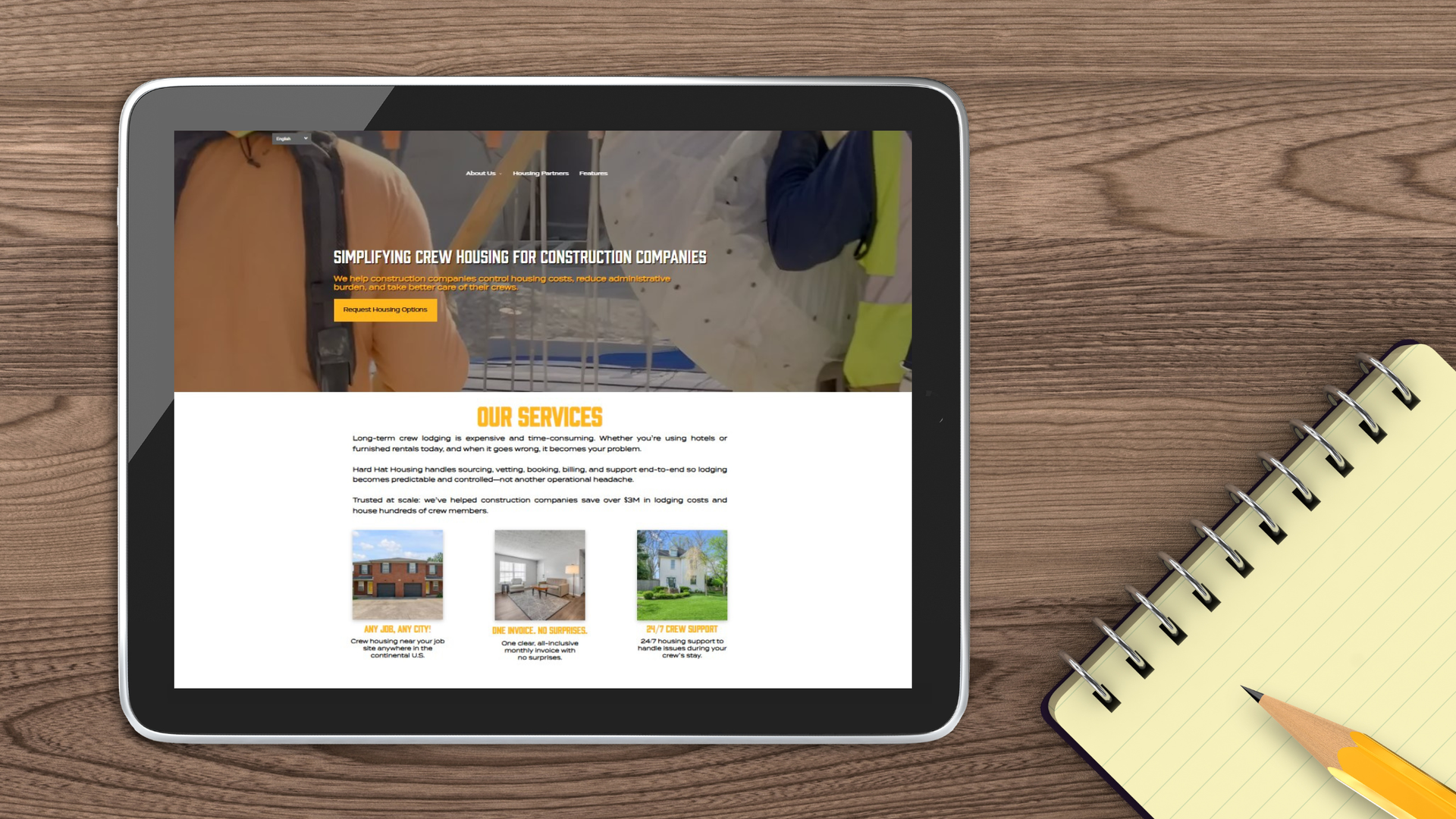
Hard Hat Housing is built around the needs of construction companies and the workers they send into the field. Our model focuses on furnished, mid-term housing for assignments lasting 30 days or more.
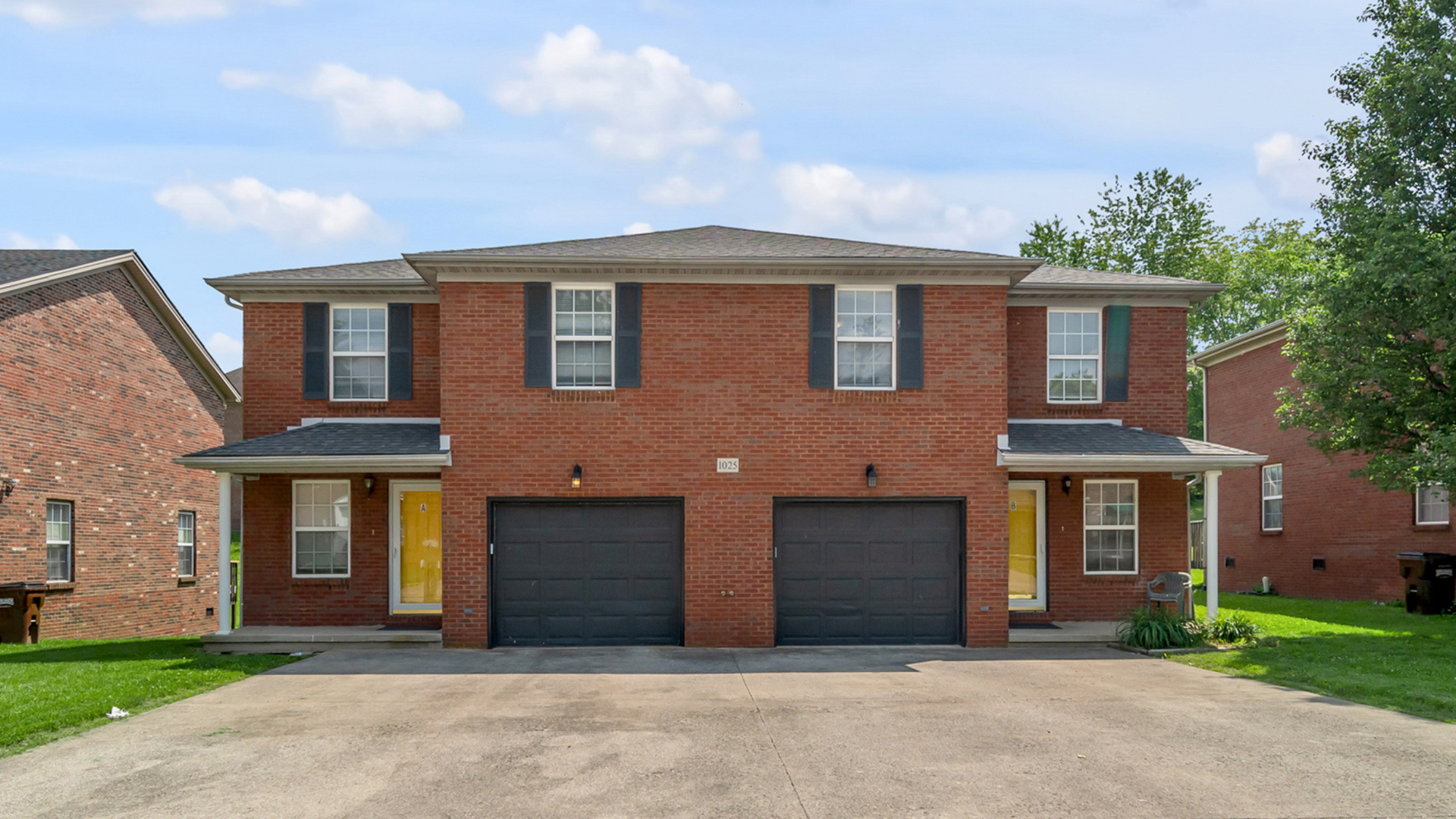
Instead of treating construction lodging like ordinary short-term travel, Hard Hat Housing recognizes that crews need a practical place to live while they complete demanding projects. Furnished homes can provide more space, privacy, kitchen access, laundry, parking, and residential comfort than a typical hotel room.
Construction companies may choose Hard Hat Housing when they need:
- Housing designed for extended crew assignments
- Furnished homes rather than individual hotel rooms
- A practical solution for multiple workers
- Support with changing project schedules
- More living space for long-term stays
- A housing partner familiar with construction needs
- A consistent point of contact for lodging coordination
The right housing arrangement can reduce costs, support worker safety, improve morale, and make remote project staffing easier to manage. For companies that regularly send crews away from home, housing should be treated as a core part of project planning—not an afterthought.
When the assignment will last a month or longer, furnished mid-term housing may offer the balance of flexibility, comfort, and value that construction teams need. With a provider such as Hard Hat Housing, companies can spend less time solving lodging problems and more time keeping their projects moving forward.