
When Renting Stops Feeling Like a Gamble
Walk through your rental in your head right now. Picture pulling up to it, unlocking the door, stepping inside. Notice what your body does. Are your shoulders tightening as you brace for what you might find, or are you simply curious how the place is holding up?
That small difference, between bracing and curiosity, is the whole experience of being a landlord in a single feeling. And it has surprisingly little to do with the property itself.
Most owners assume confidence in renting comes from the building: a newer roof, better appliances, a recent remodel. But the thing that actually decides whether you dread or trust the process is almost always the same. It is who has been living in your home.
The Quiet Weight Most Landlords Carry
There is a particular kind of low-grade stress that comes with renting out a property, and it rarely gets talked about because it does not look like a crisis. It looks like a maintenance text that makes your stomach drop. It looks like opening an email from your tenant and bracing before you read it. It looks like lying awake wondering what you will walk into at the next inspection.
This worry is so common that property professionals treat it as a defining feature of the job. The fear of a tenant who damages the property or ignores the rules sits in the back of many owners' minds throughout a tenancy, even when everything is going fine. Surveys of landlord concerns put property damage and difficult tenant behavior at the very top of the list, year after year.
Bracing
- A maintenance text makes your stomach drop.
- You open a tenant email and assume the worst.
- You lose sleep before an inspection.
- One good month never quite reassures you.
Curiosity
- A message is just information, not a threat.
- Inspections become routine and uneventful.
- You think about the property rarely.
- Each ordinary good month adds to your trust.
The hard part is that this weight does not lift on its own. A single good month does not erase it, because one good month does not prove anything about the next one. What changes the feeling is not a stretch of luck. It is a pattern you can trust.
The difference between bracing and curiosity is the whole experience of being a landlord in a single feeling.
Confidence Is Built, Not Granted
Here is the shift that matters. Confidence in your rental is not something you either have or lack based on temperament. It is something that gets built, slowly, out of repeated evidence that your property is being treated well.
Think about how trust forms in any relationship. It is not a leap; it is an accumulation. The first time a tenant reports a small issue instead of hiding it, you notice. The first inspection that turns up nothing, you exhale a little. The rent that arrives on time without a reminder, the yard that stays tidy, the walls that stay unmarked. None of these is dramatic. But stacked together over months, they rewrite the story you tell yourself about renting. The dread gets replaced, one ordinary good month at a time, with something that feels a lot like ease.
This is why the emotional experience of being a landlord can differ so wildly between two people with nearly identical properties. The one living with constant anxiety and the one who barely thinks about their rental are often not separated by the quality of their building. They are separated by the consistency of who lives in it.
Why Respectful Property Use Is Not Random
It would be easy to chalk all this up to luck, as if good tenants were simply a draw of the cards. But respectful property use is far more predictable than that. It tends to grow from two things working together: clear expectations and genuine stability.
Clear expectations come first. When tenants understand from the start exactly how the property should be treated, what counts as their responsibility, and how to report a problem, they are far more likely to follow through. Property managers see this constantly: a detailed agreement, a documented move-in walkthrough, and plain communication about the rules consistently lead to fewer disputes and less damage. People generally rise to clear standards. They struggle against vague ones.
Stability is the second half. A tenant who is settled, who plans to be there a while and treats the place as a real home, behaves differently from someone passing through. The shorter and more transactional the stay, the less invested anyone is in keeping things nice. The longer and more stable the arrangement, the more a tenant's own comfort depends on caring for the space. Respect and permanence tend to travel together.
When both pieces are present, respectful use stops being a gamble and starts being the default. And that is precisely the ground on which an owner's confidence grows.
The Kind of Tenant That Changes the Math
This is where the type of renting you do quietly shapes how you feel. Some rental models are built around constant turnover, where a new set of strangers cycles through every few days. Each arrival is a fresh unknown, and the property never gets the chance to settle into a steady rhythm. It is hard to relax into curiosity when the cast keeps changing.
Other models are built around stability by design. This is a big part of why a growing number of owners have moved toward longer-stay arrangements, and it is one of the central reasons we have written about why crew housing tends to suit homeowners better than short-term rentals. Tenants who are in town to work, settled in for the length of a project, are not looking for a party or a quick getaway. They are looking for a quiet, comfortable place to rest between long shifts, and they tend to treat the home accordingly.
That difference compounds into confidence. When the same respectful, working tenants are in place for weeks or months, you stop bracing. The inspections become routine. The texts become rare and ordinary. You start, almost without noticing, to approach your own property with curiosity instead of fear. Our full guide for homeowners renting to crews walks through what that steadier relationship actually looks like day to day.
Letting the Worry Fade
None of this means problems vanish entirely. Things still break. The occasional issue still comes up. But there is an enormous difference between an occasional, manageable hiccup and a constant hum of worry. The first is just part of owning property. The second is a sign that something about your setup is leaving you exposed and uncertain.
The goal is not a magical property where nothing ever goes wrong. The goal is a situation stable enough, with tenants reliable enough, that the small things stay small and never grow into the dread that follows so many landlords around. When you have that, renting stops feeling like a risk you are constantly managing and starts feeling like the dependable thing it was supposed to be.
So go back to that walk-through in your head. If you noticed yourself bracing, it is worth asking why, and whether the answer really lies in the property or in the uncertainty around who lives there. Confidence is available to you. It is mostly a matter of building the kind of arrangement where respectful, stable tenancy is the rule rather than the hope.
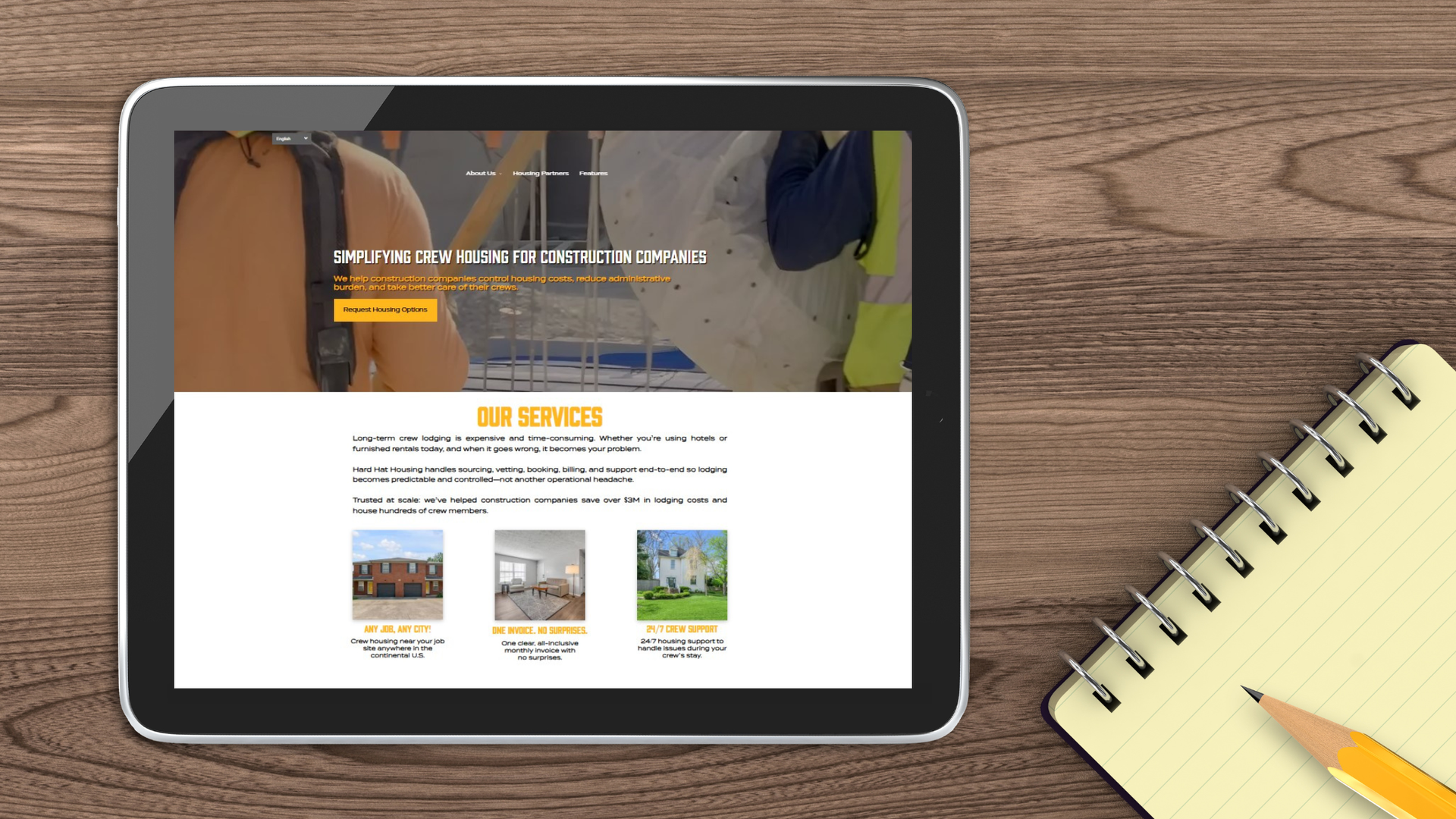
If you would like renting to feel more like curiosity than bracing, that steadiness is exactly what we help homeowners build. Hard Hat Housing places vetted, respectful working tenants in your property and keeps the expectations and communication clear, so your confidence in your own home has room to grow.
Talk to Our Team