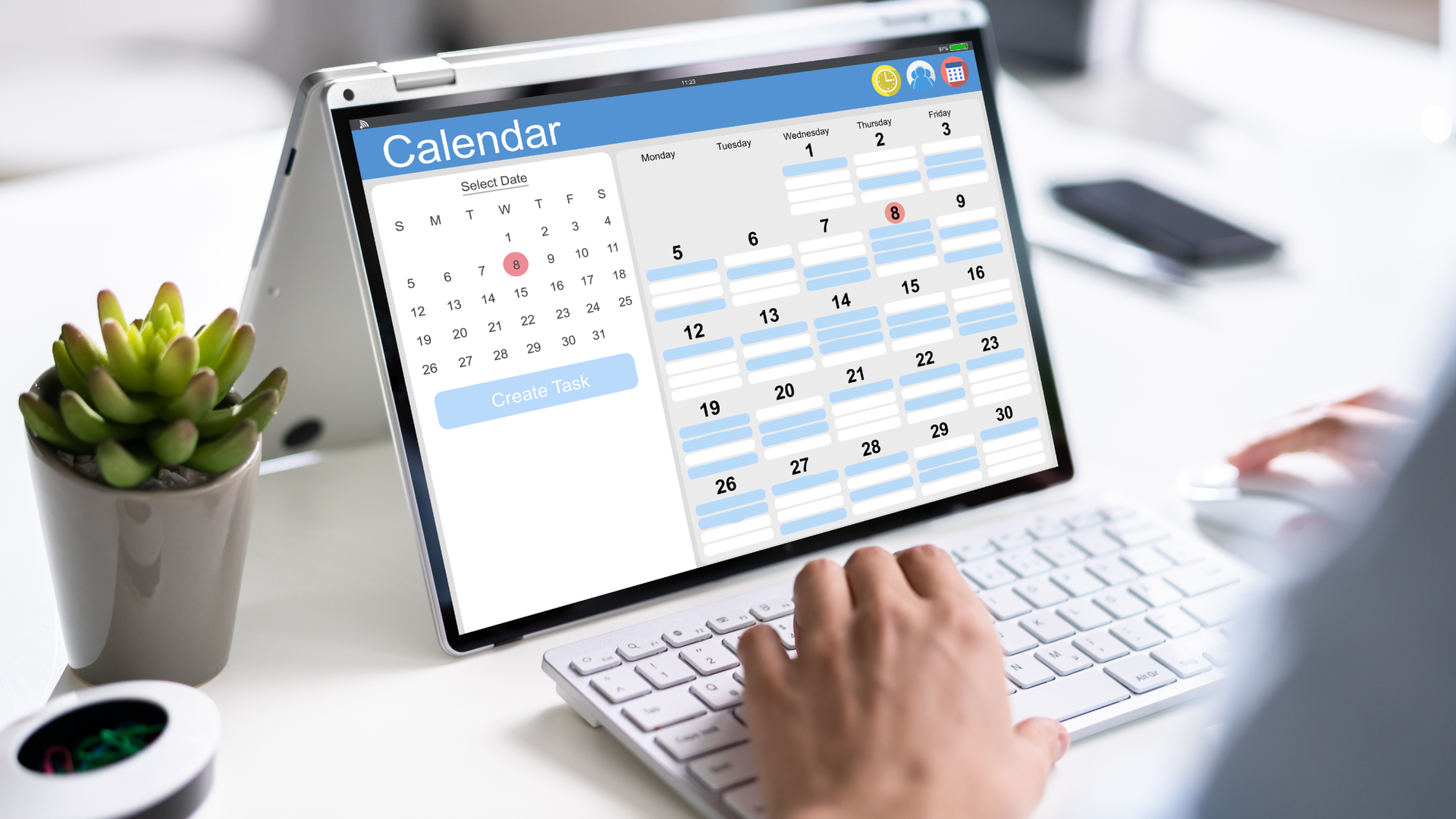

Nobody hired her to do this. She is a project coordinator, and her job description says nothing about wifi passwords. But it is 9:14 on a Tuesday night, her phone is face-up on the kitchen counter, and a foreman two states away is texting to say the router in the crew house has been blinking red since dinner. She will fix it. She always does. And tomorrow morning nobody will know it happened, including the person who could have done something about it.
This is the part of construction crew lodging that never shows up in a budget line. Somewhere in most companies there is a person who has quietly absorbed housing on top of the job they were actually hired for, and the reason nobody notices is that they are good at it. Simplified crew housing management is not really about saving time. It is about giving somebody their attention back.
The person who never volunteered
Ask around and you will usually find them fast. Sometimes it is the project coordinator. Sometimes it is a superintendent who booked one hotel block three years ago and inherited the role permanently. Sometimes it is an office manager who is also doing payroll, certified payroll, and the phones.
They did not apply for the job. It accreted. One booking became two, two became a spreadsheet, and the spreadsheet became a reputation. Now when a start date moves, everybody in the company knows exactly whose problem that is, and none of them think of it as a problem, because it always gets handled.
That is the trap inside the phrase "our team handles housing between them." Cooperation is real. The load is also real. Cooperation just makes the load invisible, and invisible costs are the ones that never get fixed.
Attention is finite, and hers is being spent twice
Here is the uncomfortable part. A person carrying crew housing on the side is quietly worse at their real job. Not because they are careless. Because attention does not multiply.
Cognitive load researchers make a distinction worth borrowing. There is the productive mental effort of understanding a problem and making a good call about it, and then there is the friction: duplicate entry, hunting for the right version, toggling between systems that do not talk to each other. That second category consumes real bandwidth and returns nothing.
Housing coordination handled ad hoc is almost entirely that second category. Chasing an owner for a lease amendment does not make anyone better at sequencing a project. It just spends the same finite supply of attention that sequencing requires.
So the cost is not the twenty minutes on the phone. The cost is the schedule conflict she would have caught if those twenty minutes had been spent looking at the schedule.
The 9pm text is doing more damage than the 9am one
Occupational psychologists have a term for the pull to respond to work messages outside working hours: telepressure. The research on it is unusually consistent. After-hours connectivity is associated with poorer sleep quality, reduced recovery, and higher work-to-family conflict, and the mechanism is not the message itself. It is rumination, the mind circling back to the unfinished thing while the body is supposedly off.
One recent analysis put it sharply: shift schedules at least draw a boundary around work, even a punishing one. Telepressure dissolves the boundary entirely and compresses the recovery time that restores cognitive capacity in the first place.
Crew housing is a near-perfect generator of this. Housing problems do not happen during business hours. They happen when people get home from the site, which is exactly when the coordinator is supposed to be off.
The person handling housing is never fully off duty, because the thing they are on call for only ever happens after hours. That is not a workload problem. It is a recovery problem, and recovery is what makes the next day's judgment possible.
A note on what the research does and does not say
It is tempting to reach for decision fatigue here, the idea that judgment degrades as decisions accumulate. It is a popular concept and there is real evidence behind parts of it. But it is also genuinely contested. A large 2025 study of healthcare professionals' judgments, designed specifically to test the claim with better methodology than most, found no credible evidence for it.
We would rather be accurate than dramatic. The stronger and better-supported ground is the cognitive load and recovery research above: attention is a limited resource, interrupted recovery degrades it, and chronic low-grade stress is measurable. Occupational health researchers studying construction professionals specifically have found that chronic stress, not physical hazard, is the most significant occupational risk they face, with documented downstream effects on sleep and mental health.
That is a serious finding, and it is not one Hard Hat Housing can claim to solve. But it does mean the background hum of one more thing to track is not a soft concern. It is an occupational one.
Why they will not tell you it is a problem
This is the part that keeps the situation stable for years.
The person absorbing housing is usually competent, conscientious, and quietly proud of being the one who handles things. Saying "this is too much" reads, to them, like saying "I cannot cope." So they do not say it. They keep absorbing.
And from where you sit, everything looks fine. Nobody is missing crew housing. There are no fires. The absence of a visible failure gets read as the presence of a working system.
It is not a working system. It is a person.
| What you see | What is actually happening |
|---|---|
| Housing always gets sorted | One person is permanently on call for it |
| No complaints about the process | The person carrying it thinks complaining looks like weakness |
| It only takes a few hours a week | The hours are the smallest part of the cost |
| The team cooperates well on it | Cooperation is spreading the load, not removing it |
| No visible failures | Failures are being absorbed before they reach you |
The tell: what happens when it breaks
You will find out how much weight one person is carrying on the day they are unavailable.
A start date shifts while your coordinator is on vacation, or out sick, or finally taking the Friday she has been owed since spring. Suddenly nobody knows which owner to call, where the lease terms live, what was agreed verbally in March, or whether the second house is booked past the fifteenth. The knowledge was never in a system. It was in her head.
That is the single clearest diagnostic for whether housing options for construction companies are being managed or just absorbed. If one person's absence creates a scramble, you do not have a process. You have a dependency.
If housing falls apart when one specific person is unavailable, that person is not managing your housing. They are your housing.
What taking it off them actually changes
The obvious answer is that the hours come back. That is true and it is the least interesting part.
The real change is that the 9pm text goes somewhere else. When crew housing is handled by a partner whose entire job is crew housing, the foreman with the blinking router calls a number that exists specifically to answer it. Your coordinator's evening stays her evening. Her attention comes back to one place during the day, where it does considerably more good.
There is a second effect that shows up later. Housing stops being tribal knowledge and starts being documented: which properties worked, what the lease terms were, what happened at move-out. That knowledge survives someone leaving. Right now, in a lot of companies, it does not.
And there is a third, which is that the crews themselves feel it. Housing that is handled well and consistently is one of the things crews notice about an employer, and it shows up in whether they come back for the next project. We have written before about how the quality of temporary housing for construction workers connects directly to retention.
Naming it is most of the work
None of this requires a reorganization. It starts with a question you can ask this week.
Ask who has handled crew housing for the last three projects. Ask them how many housing messages they got after 7pm last month. Ask what would happen if they were out for two weeks in the middle of a mobilization. You are not looking for a number. You are looking for the pause before the answer, and for the slightly embarrassed way people describe work they have been doing for free.
Then ask yourself the harder one: what was that person hired to do, and how much of it are they actually getting to do?
The different approaches to construction crew lodging each carry their own coordination weight, and it is worth understanding which kind you have quietly signed up for. Some of it is unavoidable. Most of it is not, and handing the day-to-day of crew housing to someone whose actual job it is changes what the arrangement costs your team.
Give somebody their evenings back
We built this on the job site, so we know exactly who we are describing. There is a good chance you pictured a specific person while reading this, and there is a good chance they have never once mentioned it to you.
If someone on your team is fielding housing texts at 9pm on top of the job you actually hired them for, that is worth taking off them. Call us and we will show you what that looks like in practice, with no obligation and no pitch.
Call 859-249-8641