
Ask most homeowners how they could earn money from a spare property, and you'll hear two answers. Sign a year-long lease, or list it on Airbnb and hope the calendar fills up. Both are fine. Both are also the only two options most people ever consider, which means a large, steady, growing slice of the rental market goes completely unnoticed by the very homeowners who would benefit from it most.
That slice has a name: crew housing. And the crew housing demand behind it is bigger and far more consistent than the seasonal rush of vacation bookings you might be picturing.
Here's the short version. All across the country, companies send teams of workers to job sites for weeks or months at a time. Construction crews building schools and hospitals. Crews installing equipment at new manufacturing plants. Teams standing up data centers. These people need somewhere comfortable to live while they work, and a regular furnished home beats a cramped hotel room every time. When you rent to them, you're not chasing weekend tourists. You're housing working professionals on a project timeline.
Let's walk through how real this demand is, why it doesn't rise and fall with tourist season, and what it could mean for your property.
Wait, Companies Really House Crews in Regular Homes?
They do, and they have for years. It just doesn't get talked about the way vacation rentals do, so it stays invisible to most homeowners.
The category professionals call "corporate housing" or "mid-term rental" covers exactly this: fully furnished homes rented for stays that usually run from about 30 days to several months, with rent bundled into one monthly figure. It sits in the gap between a hotel room and a traditional twelve-month lease. And the people filling these homes are relocating professionals, traveling medical staff, and, very often, construction and project crews.
$13.8B → $44B The U.S. serviced apartment market, the closest industry proxy for this kind of housing, was valued at $13.8 billion in 2024 and is projected to reach $44 billion by 2033, growing at roughly 14.5 percent a year, according to figures compiled from industry data.
According to the Corporate Housing Providers Association, two forces are driving a lot of that growth right now: a wave of semiconductor plant construction from companies like TSMC, Intel, and Samsung, and the rapid buildout of AI data centers by Microsoft, Amazon, and Google. Each of those projects needs rotating teams of workers on the ground for months, and every one of those workers needs a bed.
And this isn't only a big-metro story. Infrastructure work, road and bridge projects, hospital expansions, energy sites, and disaster recovery all pull crews into smaller cities and towns that never see much tourist traffic. If a project is happening within driving distance of your home, there's a reasonable chance a crew nearby needs housing. If you've ever wondered who actually stays in these homes, our homeowners' guide to renting your property to crews breaks down exactly who these tenants are and what they're looking for.
Why This Demand Doesn't Disappear in the Off-Season
This is the part that changes the math for a lot of homeowners.
A vacation rental lives and dies by the season. Summer and holidays might book solid, then the calendar goes quiet for months, and your income drops with it. You're also competing with every other host in town, plus hotels, for the same pool of travelers.
Crew housing runs on a completely different clock. Construction and project work follows contracts and build schedules, not vacation calendars. A crew doesn't book your home because it's a nice weekend to get away. They book it because their company won a contract nearby and the job runs through the fall. That decoupling from tourism is the whole point. When a project lands in your area, demand shows up regardless of whether it's July or January.
The stay lengths tell the same story. Where a hotel guest averages two to four nights and an Airbnb guest around four, corporate and crew stays average roughly 83 nights, just under three months. Long stays of 28 nights or more have settled in as a stable, permanent share of the rental market rather than a passing trend. One booking can cover what a dozen weekend reservations would, without the dozen turnovers.
One project-length booking can do what a whole season of weekend stays does, minus the constant churn of check-ins and empty nights.
What It Actually Means for Your Property
Steadier demand is the headline, but the day-to-day differences are where homeowners tend to feel the change. Here's what each rental style typically looks like from the owner's chair:
| What you experience | Vacation rental | Crew / mid-term rental |
|---|---|---|
| Typical stay length | 2 to 5 nights | 30 days to several months |
| Turnover | Constant, between every guest | Occasional, between projects |
| Cleaning | After every short stay | Handled monthly during the stay |
| Income pattern | Seasonal peaks and empty stretches | Steady across the project term |
| Who your tenants are | Vacationers looking to unwind | Working adults there to sleep and recharge |
A few things stand out. Because crews stay for months rather than nights, the constant turnover of a short-term rental simply isn't part of the picture. Cleaning still happens, but on a sensible rhythm: regular cleanings are carried out monthly during the stay, so the home stays well kept without a scramble between every guest. And the tenants themselves tend to be lower-wear and quieter, because they're spending their days on a job site and coming home to rest, not to party. Industry observers note that these renters value convenience and stability over a bargain, and they treat a home like a home.
That last point matters more than the numbers. When your tenant is a crew winding down after a ten-hour shift, you're not fielding noise complaints or worrying about a wild weekend. You're providing a quiet place for someone to sleep well and get up early. We wrote a fuller comparison of crew housing versus vacation rentals if you want to see the two side by side in more detail.
A Few Honest Caveats
No rental model is effortless, and crew housing is no exception. Demand is tied to local project activity, which means it helps to be in or near an area where construction, manufacturing, or infrastructure work actually happens. Some seasons and some markets are busier than others, and being close to where projects land makes a real difference.
There's paperwork worth understanding too. In most states, any stay of 30 days or longer falls under standard residential landlord-tenant rules rather than short-term lodging regulations, which is often simpler for owners, though the specifics vary by location. If you want a plain-language rundown of how these leases work, TurboTenant's guide for landlords is a solid, neutral starting point. It's also worth a quick check of your HOA rules and insurance before you list.
None of this is meant to talk you out of it. It's meant to show you that this is a real, established rental strategy with real considerations, not a get-rich-quick pitch. The homeowners who do best are the ones who go in informed.
Where Hard Hat Housing Fits
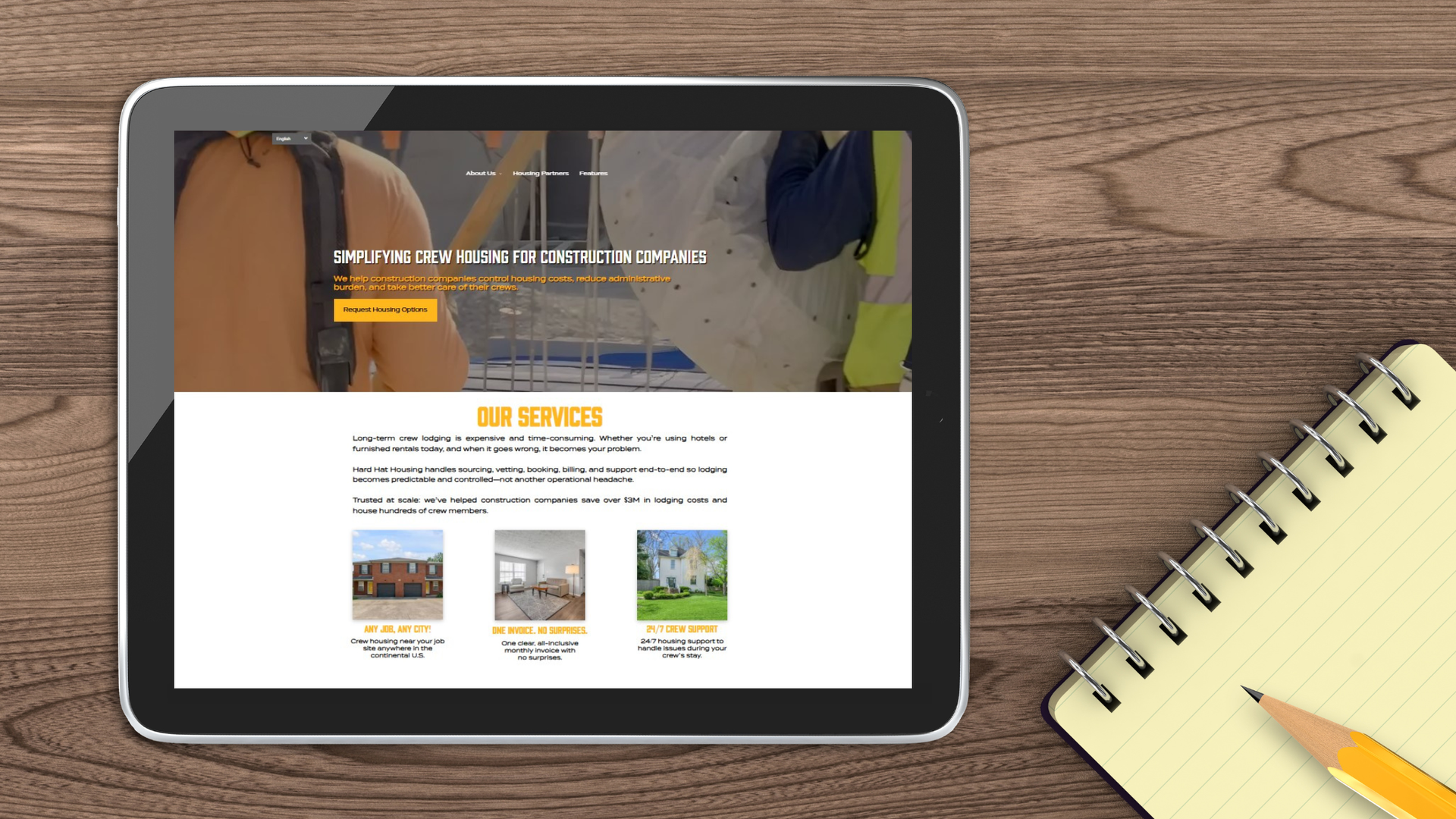
Here's where we'll be honest about our role. We're not just a listing site that leaves you to sort out the details. We specialize in one thing: connecting homeowners with construction crews who need reliable, furnished housing near their job sites.
That specialization is the value. Because we work directly with construction companies, we know when crews are heading to your area and what they need before they arrive. We coordinate the placement and handle the back-and-forth so you're not the one fielding calls. You get a steady, respectful tenant on a project timeline, and here's the part homeowners tend to be surprised by: we don't charge you anything. There's no fee to the homeowner, so the rent you agree to is the rent you keep.
We look for homes that are already furnished and crew-ready, so this isn't about asking you to build out a property from scratch. If your place already has the basics a working crew needs, the biggest question left is simply whether there's demand nearby, and that's a real conversation, not a guess. It costs you nothing to have it.
The Takeaway
The two-option view of renting, long lease or vacation rental, leaves a lot on the table. There's a third path built on steady, project-driven demand that keeps growing as the country builds more plants, more data centers, and more infrastructure. For the right homeowner, it can mean reliable income, respectful tenants, and far fewer of the headaches that make renting feel like a second job.
If you've ever wondered whether there's a steadier way to earn from your property, we'd be glad to walk you through what crew housing demand looks like in your specific area. No pressure, just a clear picture of what your home could do.
See What Crew Housing Demand Looks Like Near You