There's a particular kind of tired that homeowners know well, and it doesn't really have a name.
It's not the tired that comes from a long day at work. It's not the tired that comes from a bad night of sleep. It's something quieter — a background hum that sits just underneath everything else. The feeling that a call could come in at any moment. That a text might need an answer. That something, somewhere at the property, could be going wrong right now and you wouldn't know until someone told you.
You feel it when your phone buzzes and you instinctively check it, even at dinner. You feel it on vacation, when you're half-present because the other half of you is wondering if everything's okay back at the house. You feel it on a Sunday afternoon when you realize you haven't heard anything in a while and start to wonder whether that's good news or the calm before a message that starts with, "Hey, quick question..."
This is the part of renting out a property that nobody really talks about in the listings or the income calculators. The mental weight of being the person responsible. The quiet exhaustion of always being available. The slow erosion of your own free time — not because anything is dramatically wrong, but because you can never fully leave.
If any of that sounds familiar, you're not imagining it. And you're definitely not alone.
Why Some Rental Setups Make This Worse Than Others
Here's something most homeowners figure out only after they've lived through it — not all rental arrangements put the same demands on your attention. Some are designed, almost by default, to keep you in constant response mode. Others give you long, quiet stretches where the property just... runs.
The difference usually comes down to how often tenants change, how close the relationship is to hospitality, and how many small decisions show up in an average week.
Short-term rentals, for example, are built on high turnover. New guests arrive every few days. Every arrival is a new set of questions, a new cleaning to coordinate, a new round of communication. Multiply that by a full calendar and you have a property that's essentially always in motion — and a homeowner who's essentially always on call.
Traditional long-term rentals are quieter, but they bring their own pattern. The big issues — lease renewals, major repairs, payment problems — tend to be bigger when they do hit, and the relationship dynamics can be more complicated.
Mid-term rentals sit differently. Fewer turnovers. Fewer moving pieces. Longer stretches where the tenants are simply living there, taking care of things, and not needing your attention at all.
None of these models are objectively good or bad. But they are very different in terms of how much of your mental bandwidth they quietly consume.
The Small Things Add Up Faster Than You Think
The reason this feeling creeps up on homeowners is that individual tenant touchpoints almost never feel like a big deal on their own. Each message, each question, each little coordination task is small. Easy to handle. Five minutes here, ten minutes there.
But the small things stack.
Each one is nothing. Strung together across weeks and months, they become something else entirely — a constant, low-level demand on your attention that you never fully get to put down.
This is what people mean when they say renting out a property becomes a "second job." It's not that any single task is hard. It's that the job never really clocks out.
The Invisible Cost: Your Own Peace of Mind
There's a real emotional cost to being in continuous response mode, and it's worth naming honestly.
You start to live with a phone that's always half-monitored. You plan your week with a small mental asterisk next to it — "...unless something comes up at the property." Vacations don't feel quite like vacations. Weekends don't feel quite like weekends. Even when nothing is wrong, you're carrying the awareness that something could be, and that you'd be the one to handle it.
Over time, this adds up to something heavier than most homeowners expect when they first start renting. The income is real, and often welcome. But the cost isn't just measured in hours spent handling issues. It's measured in the mental space your property occupies even when nothing's happening.
A lot of homeowners we talk to don't realize how heavy this has gotten until they finally experience the alternative — a rental arrangement where the phone just... doesn't buzz for a while. Where a week goes by and the property genuinely takes care of itself. Where they can be on vacation without checking in. That's when the contrast becomes obvious.
What a Quieter Rental Life Actually Looks Like
If you've been stuck in reactive mode for a while, it can be hard to even picture what a quieter version of renting would feel like. So here's a sketch of what many mid-term rental homeowners describe:
- Long stretches where your only real tenant interaction is a friendly check-in message every few weeks, just to say everything's going well.
- Maintenance needs that actually get flagged ahead of time instead of becoming emergencies, because the tenants are living there and noticing small things before they grow.
- Tenants who arrive with their own rhythm — work schedules, routines, a sense of being genuinely moved in — and don't need constant guidance on how the home works.
- A rental calendar that doesn't change week to week, so you know exactly what the next few months look like.
- Fewer turnovers, which means fewer move-ins, fewer cleanings, fewer "how does the thermostat work" conversations, and fewer afternoons spent coordinating the space between tenants.
This kind of setup doesn't eliminate the homeowner role — you're still the homeowner, and your property still matters to you. But it changes the nature of it. You get to be involved when you want to be, instead of being pulled in whenever something small pops up.
Why This Matters More Than It Sounds
Every homeowner we talk to has their own reasons for renting out a property. For some, it's income. For some, it's keeping a home in the family while living somewhere else. For some, it's a long-term investment strategy. The reasons vary, but the underlying wish is usually the same — I want this to be worth it. I want this to feel sustainable. I want to feel good about this decision years from now.
The thing that most often erodes that feeling isn't a bad tenant or a major repair. It's the slow drip of constant coordination. The creeping sense of never quite being off-duty. The realization, somewhere in year two or three, that you've been running a small hospitality business on the side without anyone ever telling you that's what you signed up for.
If that's where you've landed — or where you're worried you might land — it's worth knowing there are other ways to do this. Not every rental path requires you to be a full-time property manager. Not every arrangement keeps you permanently on call.
A Different Kind of Rental Partnership
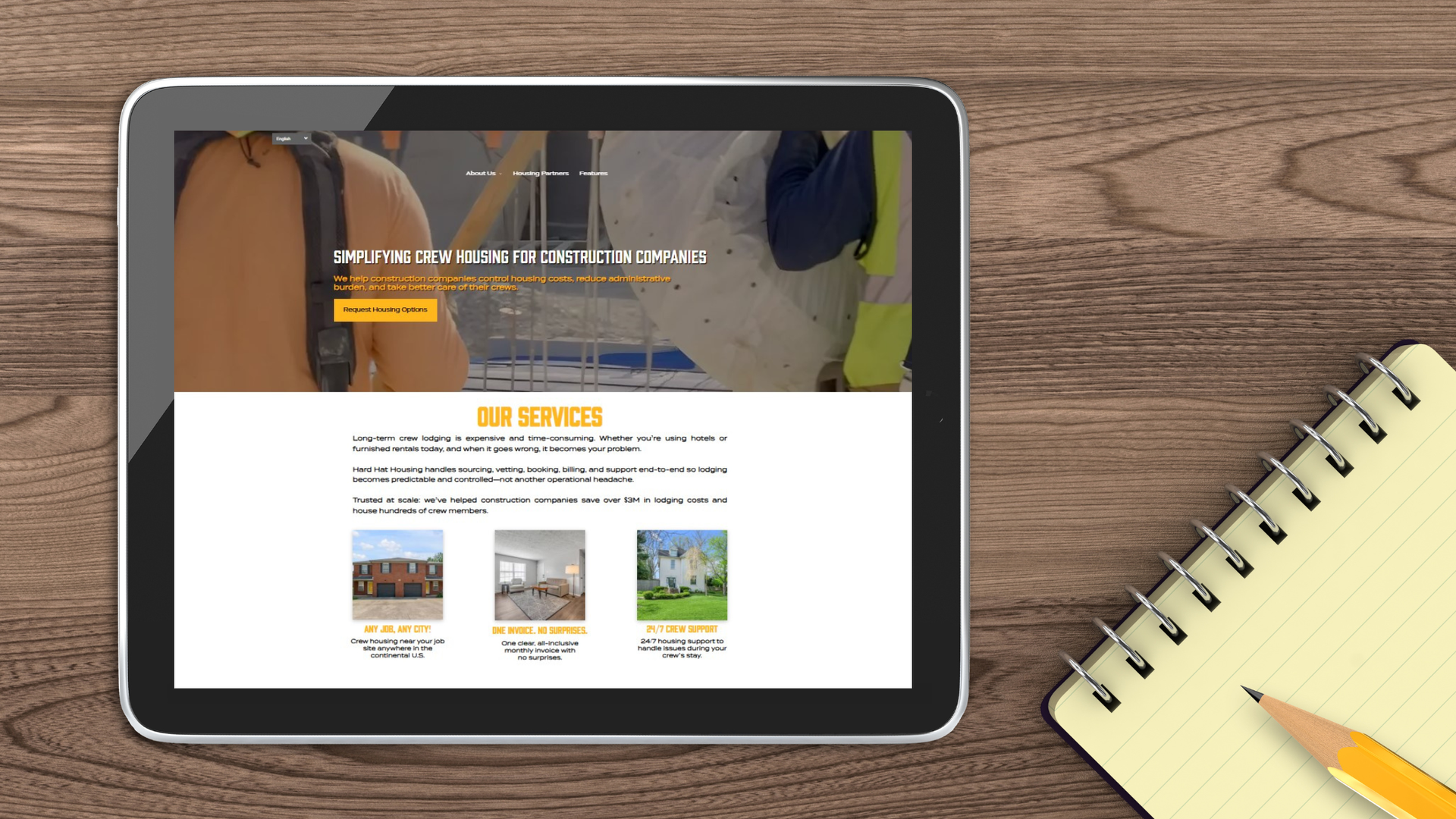
At Hard Hat Housing, we work with homeowners who want a calmer version of renting. We place construction crews into homes for the length of their projects — longer stays, fewer turnovers, and a much lower rate of day-to-day demands on the homeowner. Instead of a constant stream of small tasks, most of our homeowners describe it as quiet, steady, and genuinely manageable.
We're not going to pretend this fits every property or every homeowner. Some situations are better suited to other models. But if the "always on call" feeling has been wearing on you — and you've been wondering whether there's a version of this where your property can generate income without constantly asking for your attention — we'd be happy to have an honest conversation about it.
No pressure, no pitch. Just a straightforward look at your property, your goals, and what a less demanding rental rhythm might look like for you. Sometimes that first conversation is where homeowners finally hear themselves say out loud what they've been feeling for a long time — I'd really like to stop being on call all the time. And that's where a calmer chapter tends to begin.
Ready to Stop Being On Call?
Tell us about your property and how renting has felt lately. We'll give you an honest, no-pressure look at whether a calmer rental rhythm could work for you.
Talk to Hard Hat Housing